Baby Hates the Carrier? Fit Fixes Before You Give Up

A baby who hates the carrier usually hates something specific about it, and the most common culprit is fit: too loose, too low, legs dangling instead of in a seat, or too hot. Fix those first, in that order. Then look at timing, because an overtired or hungry baby will protest any carrier. Then try the oldest trick there is: start walking the moment your baby is in. Only after all three is it worth trying a different type of carrier. Most babies who “hate” one are telling you about a fault, not a preference.
This is a fit clinic, not medical advice. A baby who was premature, has breathing problems, or cries in a way that worries you anywhere, not only in the carrier, is a call to your pediatrician first.
Step 1: Fit faults, in the order to check them
Run these with your baby in the carrier and a mirror in front of you.
Too loose. A loose carrier lets your baby sag away from you, and a sagging baby is working to hold themselves up. Ireland’s HSE wants the carrier “tight enough to hug your baby close to you”, with your baby “high up and in an upright position with their head supported” (HSE). The test: lean forward slightly with a hand on your baby. If they peel away from your chest, tighten.
Too low. If you cannot kiss the top of your baby’s head by tipping your own head forward, they are too low. Low babies get bounced by every step and pulled at by their own weight. Shorten the shoulder straps or re-tie higher. If the slump comes back every time, the four usual causes are in baby slumping in the carrier.
Legs in the wrong place. Legs dangling straight down from a narrow base are uncomfortable to hang from. The International Hip Dysplasia Institute’s carrier guidance describes the healthy position as hips spread “with the thighs supported and the hips and knees bent”, often called the M-position. Fabric should run from knee to knee, with the knees slightly higher than the bottom. Small babies sometimes need the panel narrowed or an insert to get there; hip-healthy babywearing covers the check.
Too hot. The HSE warns it is “easy to overheat because of the body heat shared between you and your baby.” A baby dressed for the stroller and then strapped to a warm adult indoors is often simply too warm. Take a layer off your baby, check the back of their neck for sweat, and try again somewhere cooler.
While you are checking fit, check the airway too: face visible, nose and mouth clear, “a space of at least a finger width under your baby’s chin” (HSE). A baby whose chin is pressed down may fuss because breathing is harder, and that one is never a fit preference. Babywearing safety has the full TICKS check.
Step 2: Timing
Overtired. A baby past their comfortable awake time protests most things, and being strapped in is one of them. Try the carrier earlier in the awake stretch, while they are calm and curious. If you want a reference for how long babies of each age usually manage awake, Betteroo has a wake-window chart by age; treat it as a rough guide rather than a timetable.
Hungry. The fix for hunger is to take your baby out and feed them. The HSE says “Do not feed your baby in a carrier or sling”, and the Lullaby Trust says “If the baby needs to feed, take them out of the sling.” Feed seated, then try the carrier again afterwards.
Already upset. Putting a screaming baby into a carrier is hard on both of you. Calm them in arms first, then load.

Step 3: Start moving straight away
Babies who object to being loaded often settle the moment the motion starts. Have everything ready before your baby goes in: shoes on, door open, route planned. Load them, run the quick TICKS check, and walk. Standing still in the hallway adjusting buckles is the worst part of the whole carry for a baby, so keep it short.
If your baby fusses in the first minute and then settles, that is normal. If they scream for ten minutes while walking, go back to Step 1, because something is wrong with the fit.
Step 4: Consider their age and view
Older babies sometimes object because they want to see more. Two positions help: a hip carry, which lets them look around while still facing you, and, for babies who meet the prerequisites, a back carry, which puts them higher. Both need the right readiness signs, and both still need the fit checks above.
A very young baby, on the other hand, may simply be telling you the carrier does not fit them yet. A buckle carrier that needs an insert or a narrower panel is a common case.
Step 5: Try a different type
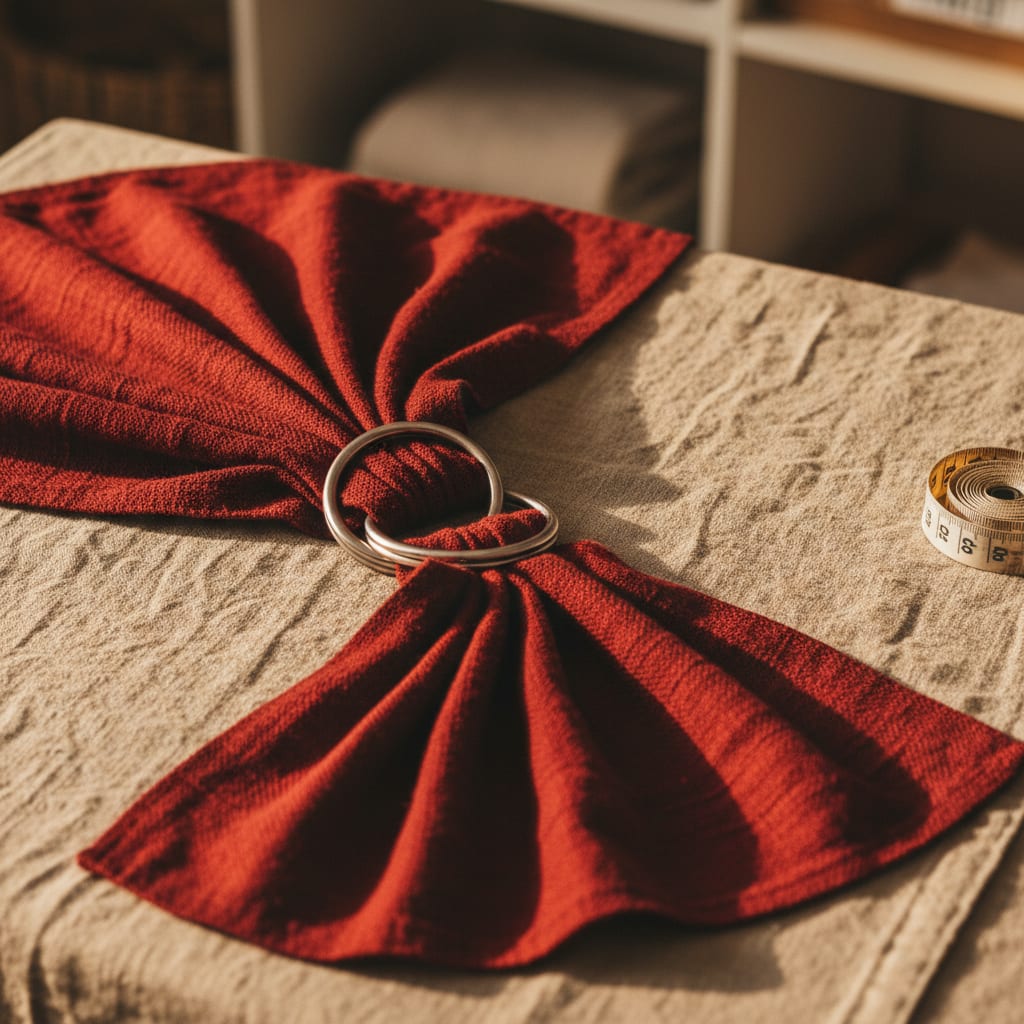
If you have worked through all of the above and your baby still objects, the carrier type may genuinely be wrong for this stage. A baby who hates a structured buckle carrier may settle in the all-over hold of a stretchy wrap such as the Moby Classic; a baby who overheats in a wrap may do better in a single-layer ring sling. Borrowing before buying saves money here, and trying before you buy covers lending libraries and what to test.
The dry aside: the carrier they hated at six weeks is often the one they demand at six months.
FAQ: when a baby hates the carrier
Why does my baby cry as soon as I put them in the carrier?
Most often because the loading itself is the bit they dislike. Have everything ready, load quickly, check TICKS and start walking. If the crying continues once you are moving, check fit: too loose, too low, legs dangling or too warm.
Should I keep trying if my baby hates the carrier?
Yes, in short, calm attempts at good times of day, after you have checked fit and heat. Do not keep going with a baby who is distressed, and stop straight away if you notice any breathing difficulty.
Can a baby grow out of hating the carrier?
Often, yes. Babies change quickly in the first months, and a carrier that did not fit a small newborn may fit well a few weeks later. Head control also makes positions like a hip carry possible, which some babies much prefer.