
You can run a toddler’s whole bedtime alone with the baby in a carrier, and on a lot of evenings it is the only way two children get to bed at once. Wear the baby on your front, facing in, high and snug, in a carrier you can put on in under a minute. Set everything the routine needs at standing height before you start. Swap the bath for a wash-up, read books sitting upright, and crouch at the knees with a hand on the baby every time you go down to the toddler’s level. Take the baby out to feed, and move them to their own sleep space once they fall asleep.
I am a babywearing volunteer, not a sleep clinician or a pediatrician. The safety points below are quoted from pages I loaded on November 27, 2026.
What the carrier is doing, and what it is not
The carrier’s job on a solo evening is to give you two hands and keep a fussy baby calm and close while the toddler gets your attention.
It is not a place to feed or a place to sleep. Ireland’s HSE carrier safety page is plain on both: “Do not feed your baby in a carrier or sling,” and “If your baby falls asleep, remove them from the sling or baby carrier as soon as possible. Place them on their back to sleep.” The UK’s Lullaby Trust slings and carriers page adds the rule that matters most at the end of a long day: “Take your baby out of the sling or carrier if you are tired or need to lie down.” Bedtime is when you are most likely to be both, so plan around those three lines.
Set up before the routine starts
Most solo bedtimes go wrong at the moment you have to bend for something. Betteroo’s planning notes for a solo evening put it simply: a solo evening “needs fewer simultaneous jobs,” so “put routine supplies where you can reach them.” With a baby on your chest, “reach” means waist height or above.
- Pajamas, a fresh diaper or pull-up and wipes on top of the dresser, not in a low drawer.
- Toothbrush and paste on the bathroom counter, with a step stool for the toddler.
- Tonight’s books already chosen and on the chair you will read in.
- The baby’s sleep space ready: crib or bassinet bare, with nothing loose in it, and a clear path from the toddler’s room to it.
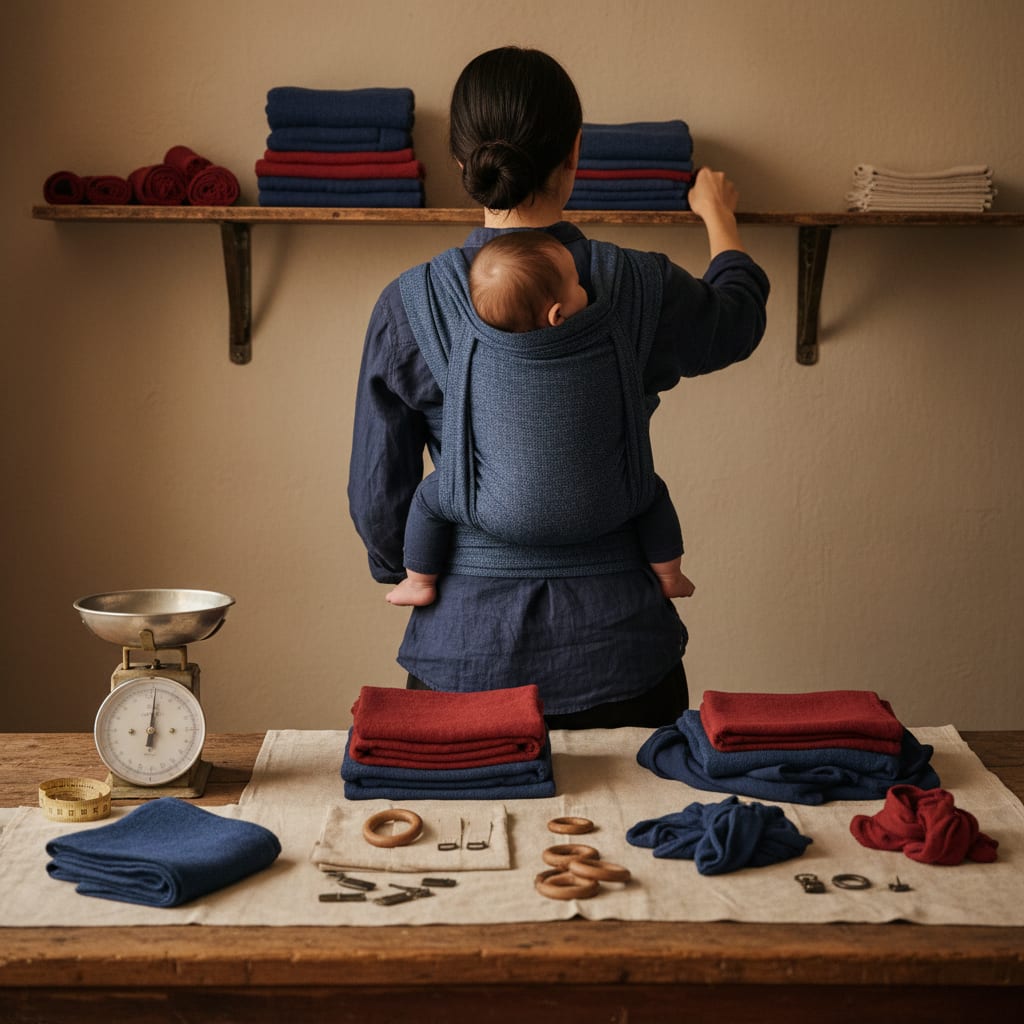
The carrier. Use one you can put on fast and tighten without help. A buckle carrier is usually quickest for this. The Ergobaby Omni Classic is the worked example: a waist belt and two shoulder straps, so the baby’s weight sits on your hips while you move about. Wear the baby on the front, facing in. A back carry frees the front of your body but needs a baby who sits unassisted and a loading routine you have already practised, as the positions-by-age map explains, and at bedtime you cannot see a baby on your back.
Before you call the toddler, run TICKS: Tight, In view at all times, Close enough to kiss, Keep chin off the chest, Supported back. The HSE page asks for “a space of at least a finger width under your baby’s chin.” The full check is on the babywearing safety page.
The routine, step by step, with the baby worn
Keep your toddler’s usual order. Betteroo’s toddler routine guide builds it from a wash-up or bath, pajamas and teeth, one or two books, a song or cuddle, and lights out, and says “The order matters less than the consistency.” What changes on a carrier night is how you do each step.
Step 1: Wash-up instead of a bath. A tub bath means kneeling and leaning over water with a baby on your chest. On solo nights, wash faces and hands at the sink with the toddler on a step stool. Save the bath for a night with two adults, or bath the toddler before you put the baby in the carrier.
Step 2: Pajamas and diaper at the dresser. Change the toddler standing up on the floor in front of you, or have them climb onto a low bed. The American Academy of Pediatrics’ carrier guidance says to “bend at the knees, not the waist, if you need to pick something up. Otherwise, the baby may tip out of the carrier, and you may hurt your back.” Every time you go down to toddler height, crouch and put one hand flat on the baby’s back.
Step 3: Teeth at the counter. The step stool puts the toddler at sink height, so you stay standing.
Step 4: Books, sitting up. Read in an upright chair or on the floor with your back to the wall. Do not read lying down on the toddler’s bed with the baby worn. That is the “need to lie down” moment the Lullaby Trust names, and a warm, dark room at the end of the day is where adults doze off.
Step 5: Into bed and goodnight. Let the toddler climb into their own bed. Do not lift them over a crib rail or onto a high bed while the baby is worn: you would be leaning forward with a weight on each side of you. If your toddler still sleeps in a crib and cannot climb in safely, do this step after the baby is down. Kneel for the goodnight kiss, with a hand on the baby.
 Two bedtimes, one of you? Line them up.
Betteroo's short quiz builds a sleep plan around your baby's age, so the baby's wind-down and the toddler's routine stop colliding at the same minute.
Take the sleep quiz →
When the baby falls asleep halfway through
This is the most common outcome, because a worn baby in a dim room during a quiet story does what babies do. The HSE rule stands: move them to their own sleep space as soon as you can, on their back.
If the toddler is calm, finish the last step and then put the baby down. If the toddler can wait two minutes, tell them so (“Baby goes in bed, then I’m back for your song”) and move the baby now. Either way, the move itself follows the carrier-to-crib transfer method: loosen in stages, lower slowly, and keep a hand on the baby for a moment before stepping back. Until you get there, keep glancing down: a sleeping baby slumps, so check the chin and the face.
When the baby needs a feed
Stop, take the baby out, and feed them sitting down. Make the pause part of the routine: the toddler sits next to you for the book while you feed. Afterwards, either put the baby back in the carrier and carry on, or settle the baby first.
If the toddler wants carrying too
Many will, especially in the first weeks after a baby arrives. Our house rule: no lifting the toddler while the baby is worn. Crouch for a hug, or sit on the floor and let them climb into your lap. If they need carrying to bed, the baby goes down first.
The dry aside: the toddler who has walked everywhere for a year will forget how to walk the minute the baby goes in the carrier.
FAQ: toddler bedtime with a baby in a carrier
Can I do bedtime alone with a baby in a carrier?
Yes. Wear the baby on your front facing in, set everything up at standing height, swap the bath for a wash-up, and bend at the knees with a hand on the baby. Take the baby out to feed or once they fall asleep.
Is it safe to bend over with a baby in a carrier?
Bend at the knees, not the waist. The AAP warns that bending at the waist can tip a baby out of the carrier and hurt your back. Keep a hand on the baby every time you crouch.
What if my baby falls asleep in the carrier during the toddler’s bedtime?
Move them to their own sleep space on their back as soon as you can. The HSE says to remove a sleeping baby from a carrier as soon as possible.
Can I read in bed with my toddler while wearing the baby?
Sit up instead. The Lullaby Trust says to take the baby out if you are tired or need to lie down.
More from the Babywearing Life shelf.