The Carrier-to-Crib Transfer: A Step-by-Step Method
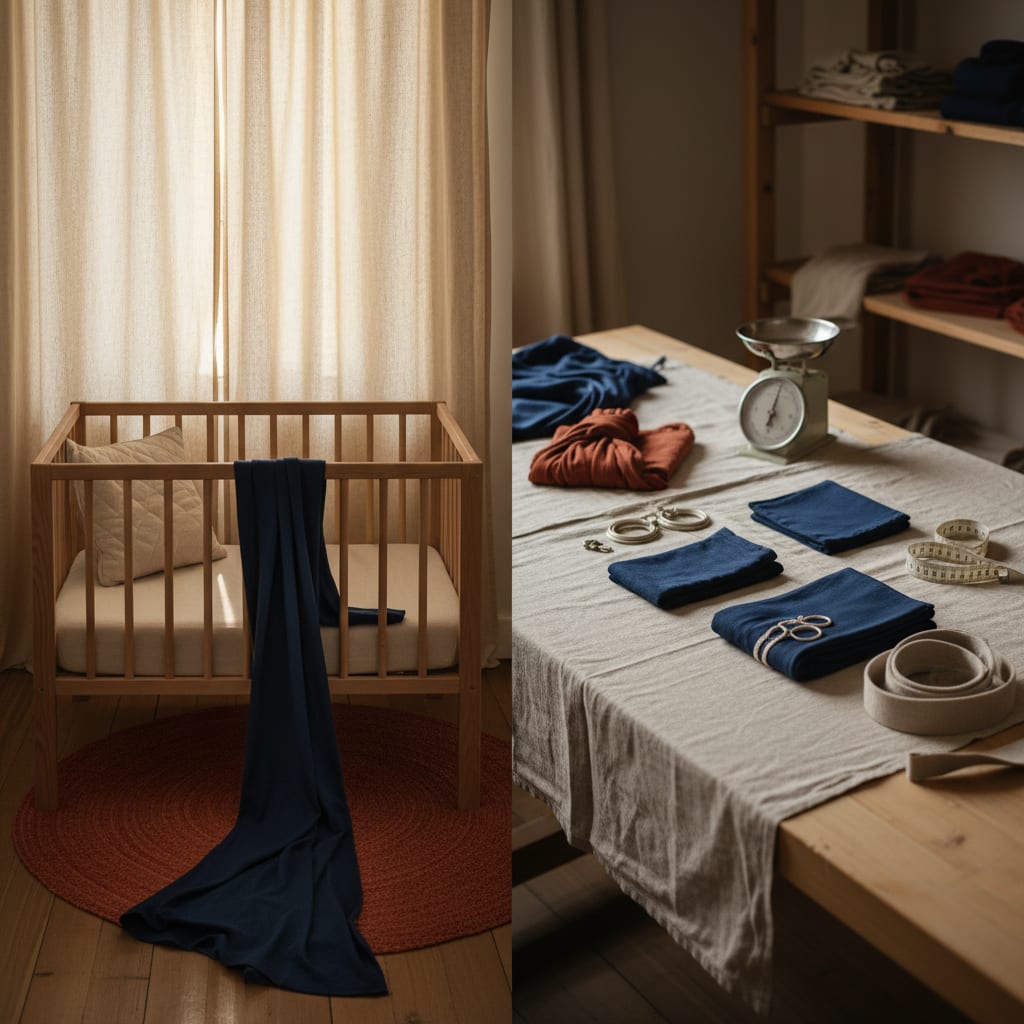
A carrier-to-crib transfer is won or lost before you start moving. Three things decide it: the crib is already prepared, your baby is in deep sleep rather than light sleep, and the carrier comes off in stages instead of all at once. The move itself is unglamorous and specific — bend at the knees, land the bottom first and the head last, keep your chest in contact until the last moment, then leave one hand resting for about thirty seconds before you retreat. Everything else on this page is detail on those three.
Set the landing zone first
Do this before your baby goes in the carrier, not after they fall asleep in it. Room dark, any sound machine already running, crib sheet smooth, and — if you use one — the wearable blanket already on, because dressing a sleeping infant at the crib side is how transfers fail. A sleep sack such as the HALO SleepSack goes on before the carry, not at the crib.
The surface itself is not negotiable and does not change for a nap: firm, flat, and empty apart from a fitted sheet. No pillows, wedges, loose blankets, toys or bumpers of any kind, and back sleeping every time until your baby rolls both ways reliably on their own. General safe-sleep guidance comes from AAP-affiliated healthychildren.org and from your pediatrician, not from a carrier blog.
Clear the route too — doors open, floor clear. A transfer that stalls at a latched door has already failed.
Read the sleep state, not the clock
Transferring a lightly sleeping baby is the single biggest cause of failure, and it is entirely avoidable, because deep sleep looks different from the outside.
Light sleep · flutters, twitches, gripDeep sleep · limp limbs, still faceCheck · lift a wrist, let go
In light sleep you will see fluttering eyelids, small facial movements, twitching limbs, and hands that stay curled. In deep sleep the face goes still, breathing settles into a slow regular rhythm, and the limbs go genuinely heavy. The reliable test is the wrist lift: raise an arm an inch and let go. If it drops like a dropped rope, you are in deep sleep. If it holds or the fingers grip, wait.
Young babies cycle into deep sleep some minutes after falling asleep, and the interval varies by baby and by age, so treat the wrist test as the instruction and any number you read as trivia. If your baby routinely surfaces after a single cycle rather than settling into the next one, that is a separate problem from the transfer — Betteroo’s guide to naps that end after one sleep cycle works through the usual causes.
Loosen in stages
Everything the carrier is doing — pressure, warmth, containment — has to be withdrawn gradually rather than removed in one movement. Give each stage several seconds and wait out any stirring before continuing.
- Unclip the chest clip, if your carrier has one, and let it hang. Do not let it swing into your baby.
- Loosen one shoulder strap by an inch or two. Your hand takes the weight the strap was holding.
- Loosen the second, so the panel is now supported by your arm rather than by tension.
- Unclip the waistband last, holding the panel and your baby against your chest with your forearm.
With a wrap, the equivalent is untying the knot and letting the passes go one at a time rather than pulling the whole thing loose. With a ring sling, thread the tail slowly through the rings; yanking it produces exactly the sudden loss of pressure you are trying to avoid.
The move itself
Keep your baby’s chest against yours for as long as physically possible, then:
- Bend at the knees and hips, lowering your whole torso towards the mattress. Do not bend at the waist and extend your arms — that puts a gap between you and them, which is what they feel.
- Land the bottom first. Bottom, then the length of the back rolling down, then the head last. The head being the last thing to leave your body is the entire trick.
- Slide your hands out sideways, not upwards. Lifting your hands out from underneath tips their head and wakes them.
- Keep your face close for a few seconds after they are down. Your breath and your smell are the last of the carrier conditions to be withdrawn.
The thirty-second hand
Then stop. Rest one flat hand on the chest or belly — firm, still, not patting — and count to thirty before you move it. Patting is a new stimulus; steady pressure is a continuation of the pressure the carrier was providing, which is why it works.
Lift the hand slowly, one finger at a time. Then stand still for another few seconds before you leave, because the sound of you walking away is a different event from you being gone.
If they wake
Go back a rung rather than starting over. Hand on the chest for longer. If that fails, pick them up and re-settle in arms without putting them back in the carrier, then try again in a few minutes. If that fails twice, put them back in the carrier and let the nap happen there — a carrier nap is a real nap, and the evidence on whether it costs you anything later is examined in do carrier naps create bad sleep habits.
Two rules do not bend while any of this is happening. A carrier is not a sleep surface: a worn baby is a supervised sleeper, with an adult upright, awake and re-checking the airway. And you never wear a baby while you lie down, recline or sleep — not on the sofa, not for five minutes. The airway checks that catch a problem before it becomes one are in babywearing safety.
When the transfer is not the problem
Some babies transfer easily from the first attempt. Some will not transfer at all for months, and no technique changes that — it is temperament and stage, not a flaw in your method. If the timing is the part that keeps going wrong, that is a scheduling question rather than a technique one, and structured nap training is the organised version of the answer. The wider case for why the carrier out-competes a crib in the first place is in why some babies only nap in the carrier, and if the crib is being refused across the board rather than just after a carry, the gradual approach in co-sleeping to crib is the better starting point.

The dry aside: you will nail a perfect transfer on the one day you had somewhere to be.
FAQ: carrier-to-crib transfers
How do I transfer a sleeping baby from a carrier to the crib?
Prepare the crib first, wait for deep sleep, loosen the carrier in stages, then lower your whole body rather than extending your arms — bottom down first, head last, hands sliding out sideways. Rest a still hand on the chest for about thirty seconds before you retreat.
How do I know when my baby is in deep sleep?
Lift a wrist an inch and let go. In deep sleep the arm drops heavily; in light sleep it holds, or the fingers grip. The other markers are a still face, unclenched hands, and slow, regular breathing. Twitching eyelids mean wait.
Why does my baby wake the moment I put them down?
Usually one of three things: they were still in light sleep, the carrier came off too quickly, or their head left your chest before their bottom reached the mattress. Temperature change matters too — a cold sheet against a warm baby is its own alarm clock.
Should I warm the crib sheet first?
Do not use heated bedding, hot water bottles or heat packs in a crib. If you want to reduce the temperature jump, put your own hand flat on the sheet for a minute before the transfer, and use a wearable blanket rather than loose bedding so your baby carries their warmth with them.
Is it a problem if the transfer never works?
No. Some babies simply do not transfer at this stage, and a carrier nap with an upright, awake, attentive adult is a legitimate nap. Keep trying occasionally as they get older — the same baby who was untransferrable at ten weeks is often straightforward at five months.