Baby Carrier Repair: What's Fixable and What Isn't
The rule that answers almost every carrier repair question is this: anything on the load path is a manufacturer job or the end of the carrier’s life, and everything off the load path is fair game at home. Hood snaps, drool pads, a pocket seam, a cosmetic patch on a wrap’s edge — fix away. Webbing, bar tacks, buckles, panel seams and rings carry a child’s weight, and a domestic sewing machine cannot reproduce what a factory bar tack does. Contact the maker before you reach for a needle, because a surprising amount is covered.
Know your load path
Load path · webbing, tacks, bucklesHome-safe · everything else
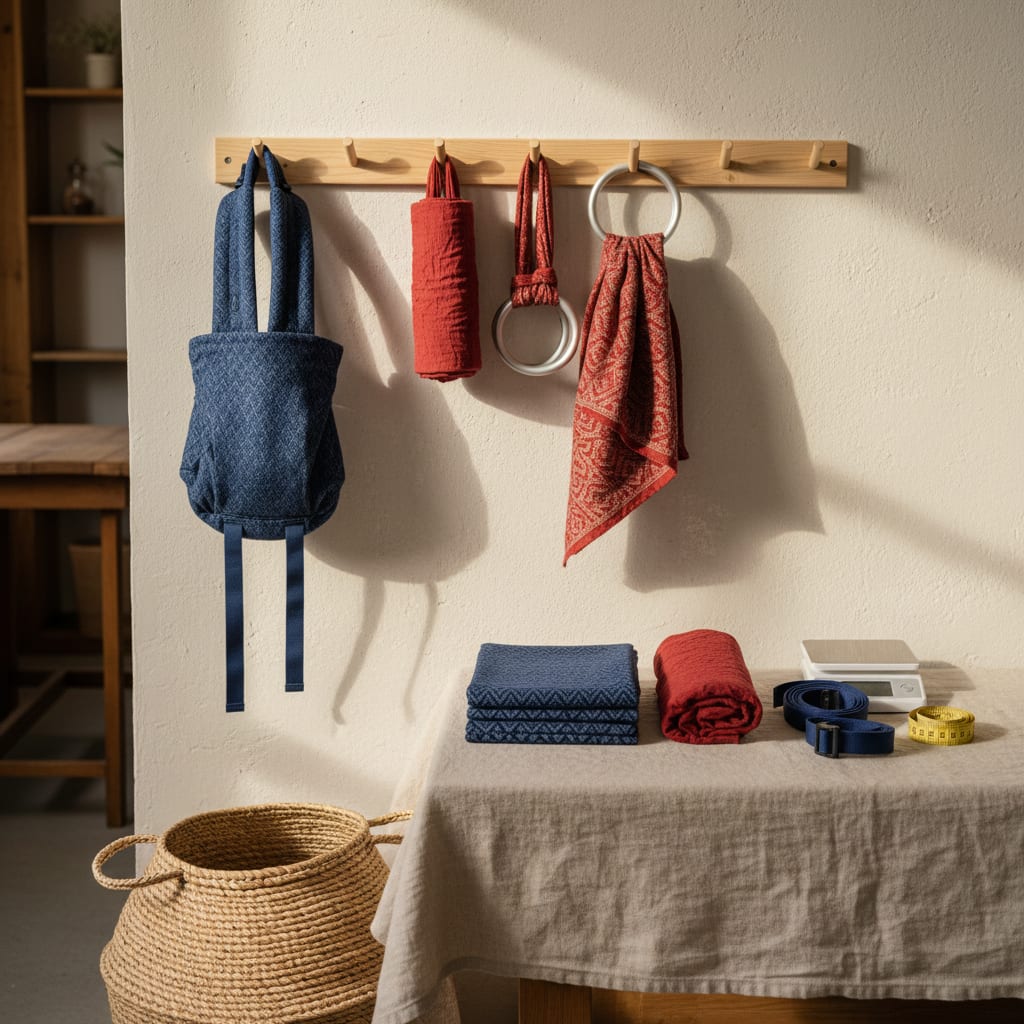
On a buckle carrier the load travels: waistband webbing → waist buckle → the bar tacks joining belt to panel → panel fabric → shoulder strap bar tacks → strap webbing → adjusters → chest clip. On a ring sling it is simpler and shorter: shoulder fabric → rings → tail, with the fabric’s own weave doing all the work. On a wrap there is no hardware at all, which is why wraps outlast everything else in a carrier drawer.
Trace that path on your own carrier once, with your hands. Everything you touched is off-limits for home repair. Everything you did not touch — hood, pocket, edging, decorative topstitching, drool pads, the sleeping hood’s snaps — is repairable by anyone who can sew a button.
Talk to the manufacturer first
The serious brands run guarantee programmes that cover manufacturing defects in buckles, webbing, fabric and stitching, and they will often supply a replacement part rather than a whole carrier. What those programmes do not cover is normal wear and tear, accident damage, or degradation from improper cleaning — which is most of what actually goes wrong on a three-year-old carrier.
The distinction is worth understanding before you write the email. A buckle that cracked in month four is a defect. A buckle that has gone chalky after two summers on a car parcel shelf is UV degradation, and no warranty covers weather. Either way, ask: replacement buckles and chest clips are commonly available as parts, and having the maker fit or supply one is the only route that keeps the load path as designed. Note also that parts availability is finite — brands typically guarantee stock for a limited period after a model’s last manufacture date, which is one more reason a discontinued carrier’s repair options narrow with time. Which current models replaced which dead ones is mapped in discontinued carriers and what replaced them.
What you can genuinely fix at home
- Hood snaps and press studs. Replaceable with a hand press. Nothing about the hood carries load.
- Drool and suck pads. These are consumables. Replacing them regularly is the cheapest way to protect strap webbing from being chewed thin.
- Small holes and pulls in a woven wrap. A pulled thread can usually be worked back into the weave with a blunt needle. A genuine hole away from the load-bearing centre can be darned with matching-weight thread. Do not patch a wrap’s middle third — that is where the load concentrates.
- Pocket seams, edging, cosmetic topstitching. Sew away.
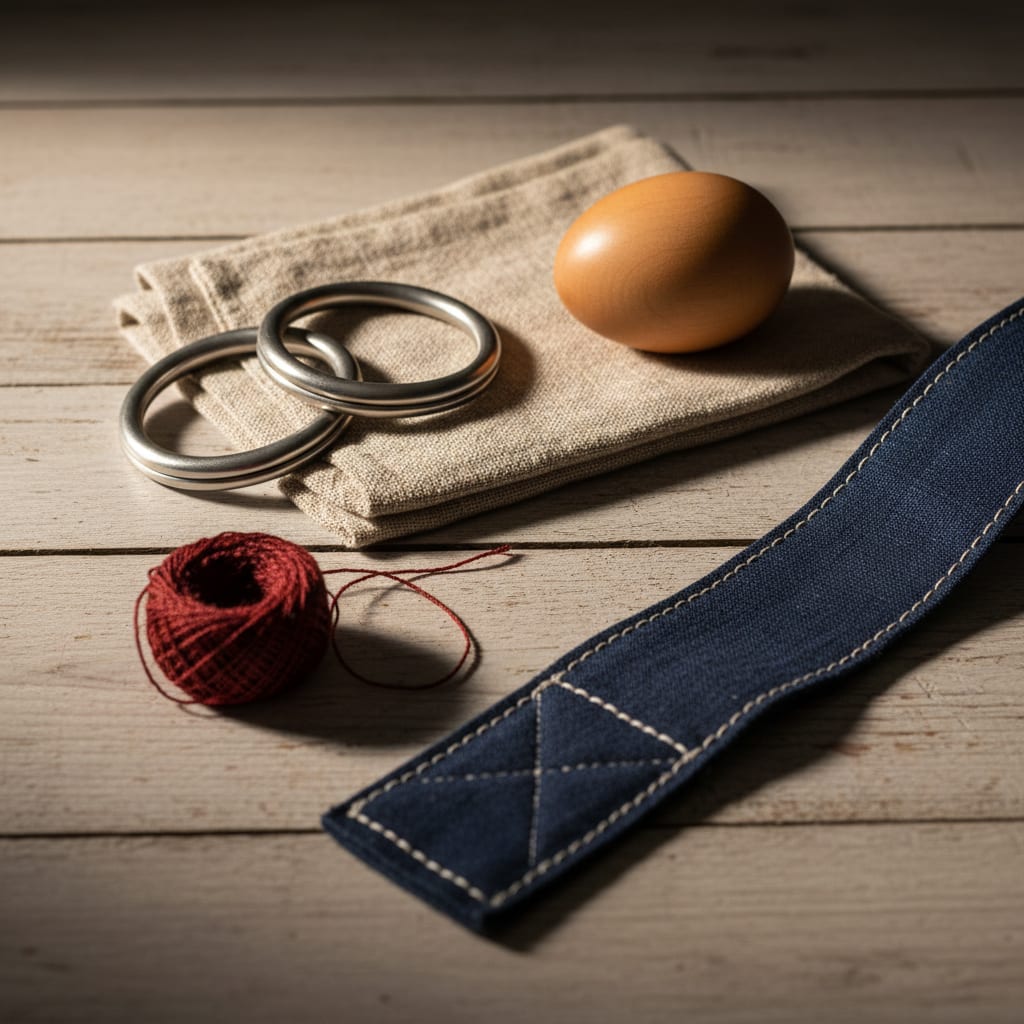
- Rings on a ring sling — but only with tested rings. SlingRings individually test their nylon rings and batch test their aluminium rings with independent lab verification. That is what you replace with. Craft-store and hardware rings are not load-rated and have no place near a baby, however identical they look.
That is the entire list. If a fix is not on it, it is not a home fix.
The signs that mean retire it
Retirement is a decision, and it is better made deliberately than during a failure on a stairwell.
- Furred, thinned or glazed webbing at any adjuster. Webbing wears where it turns under load, and the change is textural before it is visual. This is the single most common terminal fault.
- A pulled or broken bar tack. Those dense stitch blocks fail progressively, not suddenly. One gone means the rest are carrying more.
- A buckle with a hairline crack, a chalky surface, or a mushy click. Plastic embrittles with UV and heat. A buckle that no longer snaps positively is telling you its geometry has changed.
- Fabric that gives under a firm pull, or that shows pinholes when backlit. Hold the panel up to a window; thin spots are invisible flat and obvious against the light.
- Dead elastic in a stretchy wrap. Stretch a section and let go. If it does not return to its original length, the wrap will sag under load about an hour into a wear.
- Mildew that survived a wash. Damp storage degrades thread as well as fabric, and the smell is the least of it.
Any one of those on the load path ends the carrier’s working life. It does not end its usefulness — a retired carrier is a perfectly good doll carrier or a bag of good fabric — but it stops carrying children, and it certainly does not get resold. The buyer-side version of this inspection is in the secondhand carrier safety check.
What actually shortens a carrier’s life
Lifespan is mostly a storage and laundry question, which is unglamorous but true.
UV and heat are the two big ones. A carrier that lives in a car — parcel shelf, boot, back seat — ages several times faster than one that lives on a hook indoors, because plastic hardware embrittles and dyed fabric loses fibre strength under sustained UV.
Wash frequency and wash temperature. Every full wash costs a little; heat costs a lot more. The full fibre-by-fibre rules, and why fabric softener is worse than dirt, are in how to wash a baby carrier.
Storing damp, which is how mildew starts, and salt or chlorine left in the fabric after a beach or pool day. Rinse and dry properly before it goes away.
Chewing. A teething baby will work on a shoulder strap for months. Drool pads, like the Ergobaby Drool Pad & Bib, are the fix, and inspecting the webbing under them every few weeks is the habit.
Wovens have a different ageing curve worth knowing: they get better for years and then fail all at once at a thin spot. Check yours against the light every so often — the weave and blend specifics that decide where a wrap thins first are in the woven wrap guide.

The dry aside: the buckle always goes on the one carrier you cannot buy any more.
FAQ: repairing baby carriers
Can I sew a baby carrier myself?
Only off the load path — hoods, pockets, drool pads, decorative seams, and small repairs to the edges of a woven wrap. Webbing, bar tacks, panel seams and anything attached to a buckle are load-bearing, and household stitching cannot match the strength of a factory bar tack.
Can you replace a broken buckle on a baby carrier?
Yes, but through the manufacturer. Replacement buckles and chest clips are commonly stocked as spare parts, and fitting them correctly keeps the tested load path intact. A buckle sourced elsewhere and fitted at home changes a structural component with no way to verify the result.
How long does a baby carrier last?
Longer than most people use one, if it is stored out of the sun and washed cold and rarely. What ends carriers early is car storage, hot washes, fabric softener and damp storage — not the number of children carried. Wovens routinely outlast two or three buckle carriers.
When should I stop using a baby carrier?
The moment you find furred or thinned webbing at an adjuster, a pulled bar tack, a cracked or chalky buckle, fabric that gives under a firm pull, or a stretchy wrap whose elastic no longer recovers. Those are structural, they progress, and none of them is worth one more outing.
Is it safe to buy replacement sling rings online?
Only from a supplier that publishes its testing. Rings made for babywearing are weld-free, smooth and strength-tested — individually or by batch with independent lab verification. Rings from a craft or hardware store look similar and are not load-rated for a child, so they never go on a sling.