Woven Wraps Explained: Sizes, Blends and First Buys
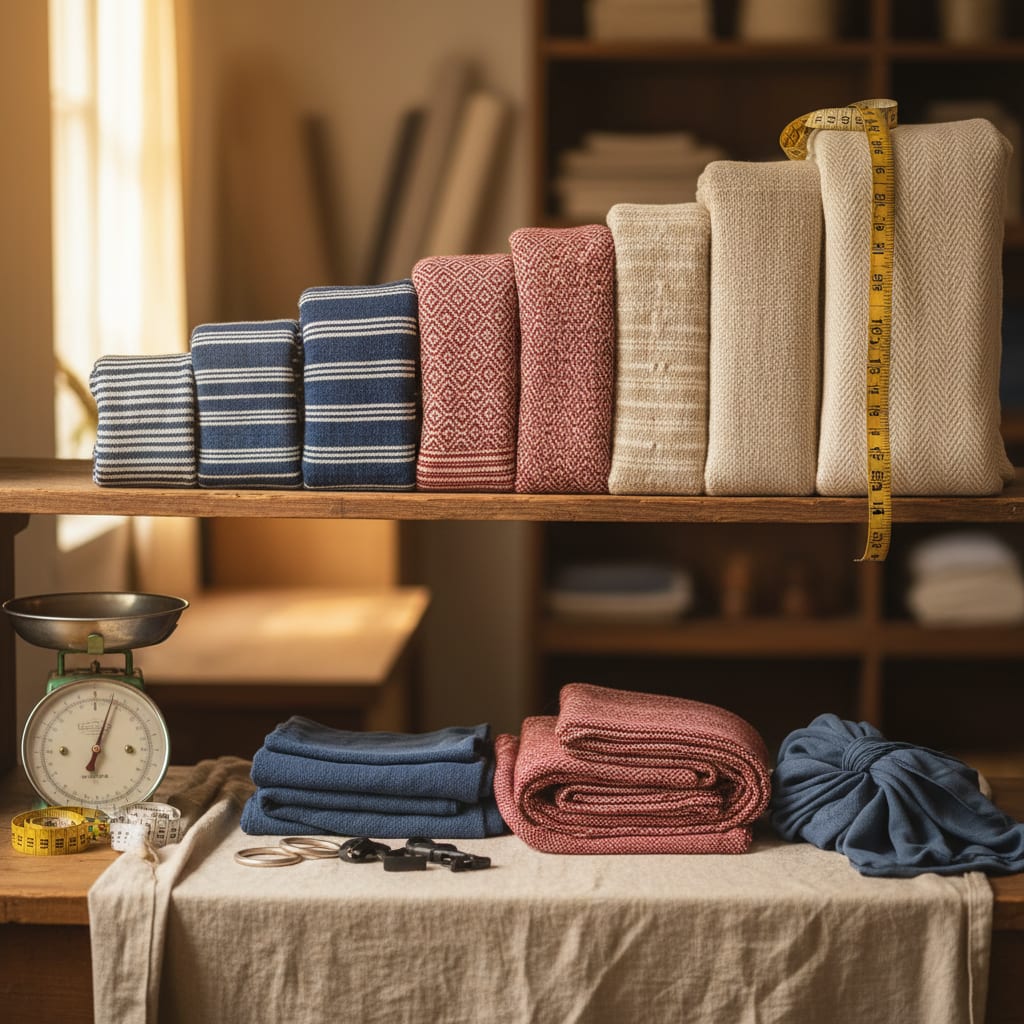
Woven wrap sizes are the first wall every curious parent hits, so here’s the system in one paragraph: wraps are sold in numbered sizes from about 2 to 8, each number roughly 60 cm longer than the last, with size 6 (about 4.6 m) the most common starting point. Your “base size” is the size that completes a full front wrap cross carry on your body — smaller frames wrap shorter, larger frames longer. Base size buys you every carry; base-minus-two (“shorty”) sizes buy speed and less fabric to manage. That’s it. The rest of the mystique is fabric talk, and fabric talk is learnable.
A woven wrap is simply a long rectangle of non-stretch cloth, woven specifically to be strong, diagonal-giving, and grippy in a knot. It is the most capable carrier type in existence — newborn to preschooler, front, hip, and back — and the only one where the learning curve is the price of admission.
Why anyone bothers: the case for wovens
Every other carrier is a fixed design you adjust to. A woven is raw capability you shape: it fits every wearer in the household identically well, spreads load across your whole torso rather than two straps, and does carries no structured carrier can attempt. The cost is practice — call it a few focused sessions to competence at a front carry, more for back carries. Whether that trade is delightful or exhausting is a personality question; the QB Quiz asks it honestly.
The original quirkybaby.com carried wovens from the classic European and artisan weavers — Dolcino, Ellevill, Wrapsody among them — and taught the sizing system this page now hands on. Some of those brands have since folded, which is the woven world in miniature: the wraps outlive the companies.
The size system, properly
| Size | Approx. length | What it does |
|---|---|---|
| 2 | ~2.7 m | Rebozo-style one-shoulder carries; the minimalist’s toddler tool |
| 3 | ~3.2 m | Rucksack back carry for experienced wrappers; hip carries |
| 4 | ~3.7 m | The common “shorty” — quicker carries, less tail |
| 5 | ~4.2 m | Base for smaller frames; versatile middle child |
| 6 | ~4.6 m | The default first size; base for average frames |
| 7 | ~5.2 m | Base for larger frames; extra-tail comfort carries |
| 8 | ~5.7 m | Large-frame base and the fancy-finish crowd |
Lengths vary slightly by maker — treat the table as the map, not the surveyor’s record. Buy your base size first; add a shorty later if the hobby takes.
Fabric blends without the sommelier act
All-cotton is the correct first wrap: forgiving, washable, affordable, grippy enough to hold a slightly imperfect pass. Linen and hemp blends add strength and coolness for heavy babies and hot days, at the cost of a stiffer break-in. Wool blends are the cush champions for big-kid back carries, with wool’s care rules. Silk and fancy blends exist where hobbies meet jewelry. Weight (measured in g/m²) tracks warmth and toddler-worthiness: lighter wraps run cooler and thinner; heavier wraps cushion more and knot bulkier. A mid-weight all-cotton size 6 from an established weaver — Didymos, weaving since 1972, is the canonical worked example — answers the first-wrap question completely. Secondhand is the woven world’s natural economy; check for pulls, thin patches, and repairs, and buy from the many dedicated swap communities without fear.
The dry aside: wrap collecting is real, financially serious, and entirely optional. The baby cannot tell the difference between a limited edition and a workhorse. The baby would eat both.
Your first carry and where wovens go next
Start with the front wrap cross carry (FWCC) in your base size — it’s the woven’s equivalent of the stretchy wrap’s pocket carry, teaches strand-by-strand tightening (the skill that is wrapping), and works from birth through toddlerhood. Where wovens then outrun everything else is the back carry: from independent sitting for most wrappers — earlier only with real experience — a high woven back carry puts a curious baby at shoulder height with load spread you have to feel to believe. The readiness gates and mirror-check habits in the positions-by-age guide apply doubly when the passenger is behind you.
All standard rules hold: upright, high, tight, visible, chin off chest, and knees above bottom every single carry, per the safety check. A woven’s tightening precision is actually a safety feature once learned — nothing else lets you correct exactly one loose centimeter.
Woven vs stretchy, settled in one paragraph
Same silhouette, different machines: the stretchy wrap is knit, pre-tie-able, newborn-soft, and retires around 15 lb; the woven is non-stretch, tied per-carry, steeper to learn, and never retires. If you loved the stretchy season and mourn its end, the woven is the succession plan. If you tolerated the stretchy, buy buckles and live happily. The longer version of that comparison — fabric mechanics, layers, heat, learning curve — is in woven wrap vs stretchy wrap.
Which specific woven to buy is a different genre of question, and one this site deliberately doesn’t rank. Our sibling review site does: their luxury woven wrap alternatives roundup is the right click if the collector-tier prices have started to look normal to you.
FAQ: woven wraps
What size woven wrap should I buy first?
Your base size — size 6 for average frames, 5 for smaller, 7 for larger — because it completes every foundational carry. Guides that say “just get a 6” are right for most people and quietly wrong for the tails of the size distribution, which is why the base-size concept exists.
Are woven wraps safe for newborns?
Yes — wovens are arguably the most precise newborn tool, since you tighten each pass to the exact body in front of you. The standard airway and positioning rules apply without modification, and premature or low-tone babies need a pediatrician’s green light first, as with any carrier.
How hard is it to learn to wrap?
A competent, safe front carry: a few practice sessions over a bed with a mirror. Back carries: longer, and worth learning with in-person or video guidance. It’s a genuine skill with a genuine payoff — closer to learning to braid than to learning an instrument.
What’s a wrap conversion?
A carrier (ring sling, mei tai, or SSC) sewn from woven-wrap fabric — the cottage industry where wrap qualities meet easier formats. A wrap-conversion ring sling is a particularly lovely object; the format rules of whichever carrier it became still apply.