Baby's Hands Cold at Night? How to Tell If They're Too Cold
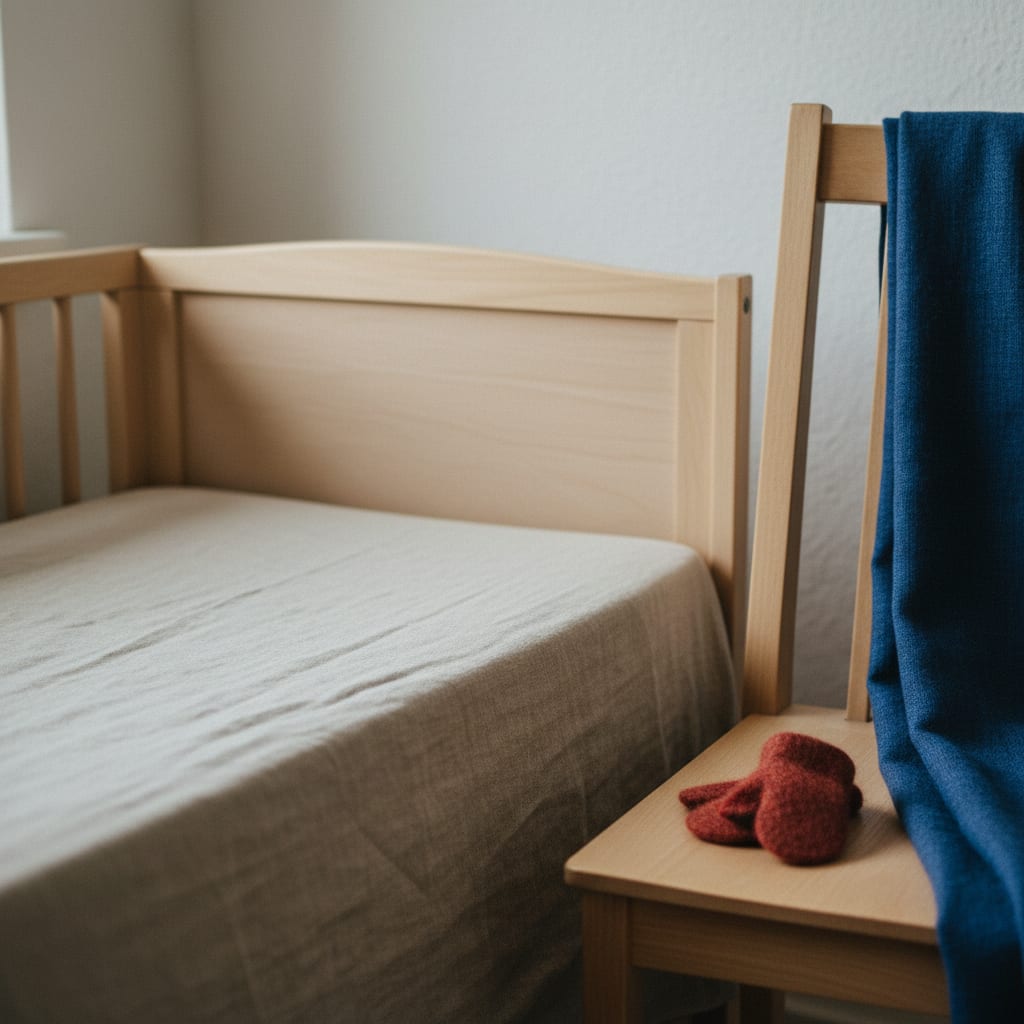
Cold hands and feet on a sleeping baby are usually normal, and they are the wrong place to check. Feel the chest or the back of the neck instead. Warm and dry means your baby is fine. Hot, sweaty or flushed means a layer comes off. A chest that feels cool means one layer of clothing goes on, or a warmer sleeping bag. Never a hat and never a loose blanket. Hands only become the thing to watch outdoors, in the carrier, where fingers and toes are exposed to real cold. In the crib they are just running cool.
Why the hands are the wrong instrument
The NHS puts it in two sentences on its SIDS page: “Check your baby’s temperature by feeling their chest or the back of their neck. Do not worry if their hands or feet feel cool, this is normal.” The Lullaby Trust’s cold weather page is blunter: “Their hands and feet will always feel cold, so check their chest and back instead.”
The risks are not symmetrical. The NHS, the AAP and NIH’s Safe to Sleep campaign all name overheating as a SIDS risk, and the Lullaby Trust adds that “babies are safer when they’re a little bit cooler, rather than too hot.” Reading cold fingers as a cold baby pushes the wrong way, usually at 2 a.m., when nobody checks twice.
The check, done properly
Slide two fingers inside the neck of the sleeping bag, flat against the upper chest, or rest them on the back of the neck below the hairline. Then read it against four outcomes:
- Warm and dry. Right where you want them. Leave it.
- Hot, sweaty, clammy or flushed. Too warm. The AAP’s safe sleep guide lists “sweating, a hot chest or flushed skin” as the signs; the NHS says to “remove 1 or more layers of clothing or bedding if your baby skin is hot or sweating.”
- Cool to the touch on the chest. Possibly cold. The Lullaby Trust’s dressing-for-sleep page says “your baby may be cold if their chest feels cold,” and the fix is “an extra layer of clothing or choose a higher tog sleeping bag.”
- Cold hands, warm chest. Normal. Nothing to do.
Change one thing at a time, then check again a little later.
Dressed for the walk vs dressed for the crib
The two settings run on opposite rules, and the evening walk often ends at the crib door.
| In the carrier on a cold walk | In the crib at night | |
|---|---|---|
| Heat source | Your body and the carrier panel | Only their own layers |
| Hands and feet | Exposed, and worth protecting | Expected to feel cool |
| Head | A hat outdoors | No hat indoors |
| Adding warmth | A cover outside the carrier | A clothing layer or a higher-tog sleeping bag |
| Where to check | The back of the neck, during the walk | The chest or the back of the neck |
In the carrier, the torso gets your heat as well as its own. Ireland’s HSE carrier safety page warns that “it’s easy to overheat because of the body heat shared between you and your baby.” The legs, hands and feet hang outside the panel, though, and the AAP’s cold weather advice notes that frostbite “tends to happen on extremities like the fingers, toes, ears and nose.” Outdoors, the AAP asks for “warm boots, gloves or mittens, and a hat.” Out there, cold fingers are a real signal. The full layering method is in winter babywearing.
In the crib, the shared heat is gone, so dress for the room. All four bodies agree on the head: the AAP says not to put a hat on your baby “while indoors once you’re home from the hospital”, Safe to Sleep says “take off baby’s hat when inside”, and the NHS and the Lullaby Trust say the same.
The handoff: carrier to crib after a cold walk
A baby who falls asleep in the carrier on the way home needs moving. The HSE says to “remove them from the sling or baby carrier as soon as possible” and place them on their back. Before they go down:
- Hat, hood and outdoor layers off. The NHS: “remove hats and extra clothing as soon as you come indoors or enter a car, bus or train even if it means waking your baby.”
- Into their sleeping bag, sized for their weight and fitted at the neck and shoulders so they cannot slip down inside it.
- Check the chest, then check again later. The first reading after a carry can still reflect the carrier, because they have been sharing your warmth. The later reading tells you about the crib.
The transfer itself, loosening in stages and setting them down bottom first, is in the carrier-to-crib transfer. Do not pre-warm the crib with a hot water bottle or an electric blanket; the NHS says babies should never sleep with either.
When the room really is cold
The NHS and the Lullaby Trust both give a room range of 16-20°C, roughly 61-68°F, and both suggest a room thermometer because guessing is unreliable. A plain digital one such as the TempPro TP50 answers the question in a glance. The AAP’s parent guide frames it as layers rather than a thermostat number: “Your baby only needs one more layer than you would wear in the same environment to be comfortable.”
If the room drops below that range, the Lullaby Trust’s answer is to add a layer of clothing or move to a higher-tog bag, such as a 1.5 TOG sack like the HALO SuperSoft wearable blanket. Its other points are the ones people miss:
- No blanket on top of a sleeping bag.
- Layers do not add up the way the labels suggest. Two 1.0 tog bags do not make a 2.0, “because air becomes trapped between layers and increases the warmth.” A doubled blanket counts as two.
- Nothing weighted under one year.
- The heating can usually go off at night. It is “rarely necessary to keep your heating on all night,” and if you do leave it on, set it low and “certainly no higher than 20°C.”
- The crib stays away from radiators and heaters.
The Lullaby Trust publishes no room-to-tog chart, because fabrics vary too much, and points parents to the manufacturer’s tog guide. For a starting point, Betteroo’s table of sleep sack warmth by room temperature is built from brand charts. It uses the same chest-not-hands check, which beats any label.

When cold is a doctor question
A baby with a fever can feel warmer than usual, and the Lullaby Trust says not to “wrap an unwell baby up more than usual.” Real cold looks different from cool hands. The AAP describes hypothermia as a child who may “shiver and become lethargic and clumsy,” and says to call 911 at once if you suspect it. A chest that stays cold after you have added a layer, or a baby who is floppy, hard to wake or unusually pale, needs a call to your pediatrician the same night, not another layer. For a baby born prematurely, ask their pediatrician how to layer them.
The airway rules from every carry still apply at the crib: face clear, nothing over the head. They are set out in babywearing safety.
FAQ: cold hands and feet at night
My baby’s hands are cold at night. Is the room too cold? Not on that evidence alone. Hands and feet run cooler than the core, and the NHS calls it normal. Check the chest or the back of the neck. If that is warm and dry, the room is fine for what they are wearing.
Should I put mittens or extra socks on for sleep? None of the safer-sleep guidance cited here asks for them. When the chest says a baby is cold, the fix is a whole layer of clothing or a higher-tog sleeping bag.
My baby fell asleep warm in the carrier. Do I leave them in it? No. Move them to their crib, on their back, as soon as you can, with outdoor layers and hat off. The carrier is for awake carrying and supervised dozes, not a sleep space.