Ring Sling Too Loose or Digging In? Adjustment Guide
A ring sling that has gone loose, slipped down or started sawing into your shoulder is rarely broken — it is threaded, seated or tightened wrong, and there are only four faults to work through. Tighten in three separate strands rather than hauling on the whole tail. Keep the rings high, near your collarbone, not down by your armpit. Spread the shoulder fabric across the whole width of your shoulder instead of letting it rope. And set the seat knee-to-knee before you take out any slack. That is the entire clinic, in the order the faults usually turn up.
This is peer-educator troubleshooting, not medical advice. A baby who was premature, has low muscle tone or has any breathing concern is a conversation with your pediatrician before a conversation about carriers — healthychildren.org is the AAP-affiliated place to start.
What is actually holding the weight
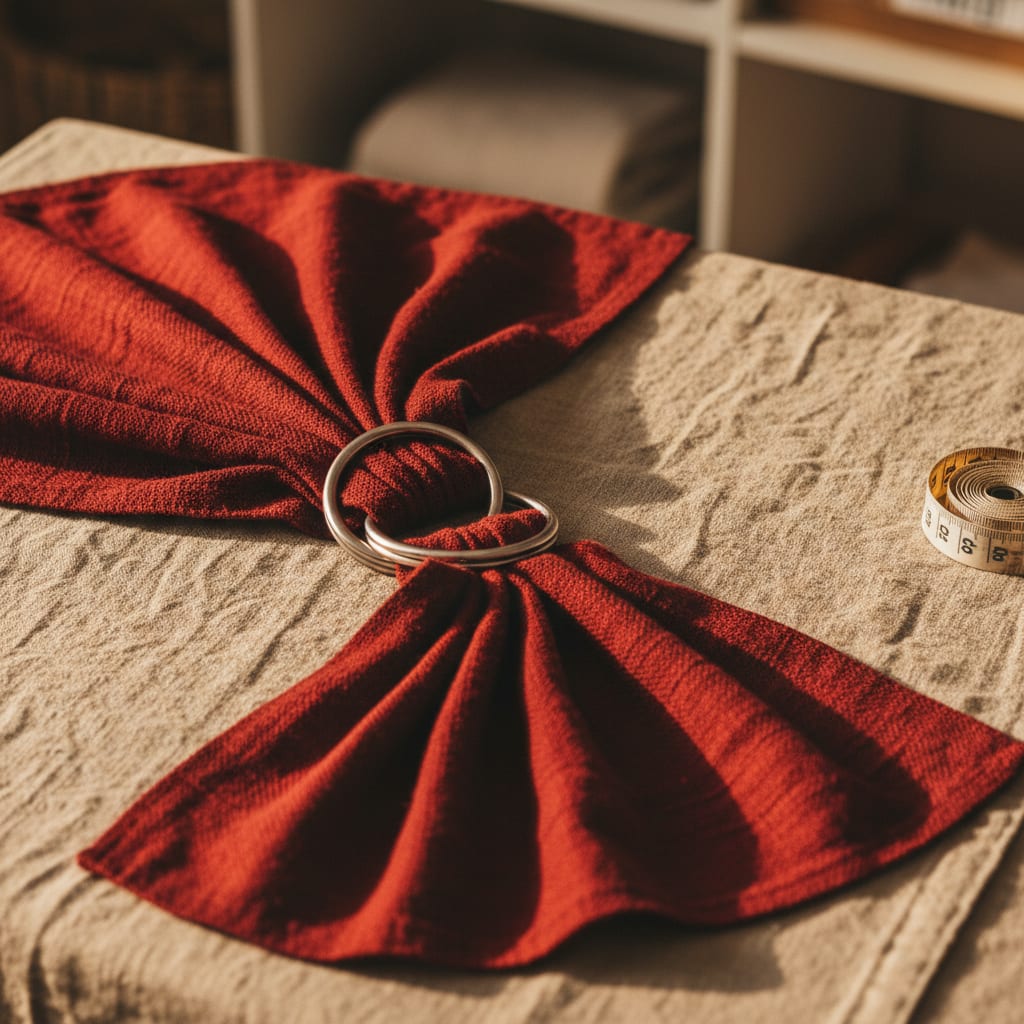
A ring sling is one length of woven fabric with two rings sewn into one end. You thread the loose end (the tail) through both rings and back through one, and friction between fabric, rings and fabric does the rest. Nothing clamps, nothing ratchets: the hold comes from the angle of the fabric bending over the ring, which is why small changes in where the rings sit change how well it grips.
Three parts get named constantly in fixes. The top rail is the edge running under your baby’s arms and behind their neck, the bottom rail is the edge behind their knees, and the middle is everything between. Those three zones tighten independently. The full anatomy — fabric blends, ring materials, sizing — lives in the ring sling guide; this post assumes you own one and it is misbehaving.
Threading: the fault nobody checks twice
If a sling refuses to hold tension at all, suspect the threading first. Tug the rings: fabric that slides straight through has gone through one ring only, and fabric that jams has gone back through both. Re-thread from scratch with the steps in how to use a ring sling.
Two more threading details do most of the quiet damage. The fabric must be fanned, not bunched, where it passes the rings — a gathered rope has a fraction of the contact area and slips under load. And it must not be twisted anywhere in the pass; a single half-twist puts the weave on edge and it will creep all afternoon.
While you are there, look at the rings. Rings sold for babywearing are a single closed loop with no seam to open under load, sized to the fabric weight. Craft rings, curtain rings and hardware-store rings are none of those things and belong nowhere near a baby.
Tighten in three strands, never one
The most common technique fault is pulling the tail like a bell rope. That drags the slack into whichever strand is loosest — usually the middle — and leaves the rails as they were.
Do it in three passes instead, with one hand supporting your baby’s back throughout:
- Top rail first. Pinch just the top edge of the tail and draw it out through the rings. This strand holds the upper back against your chest and decides whether the head is supported or lolling.
- Middle second. Feed the body of the fabric through in a small fan, spread rather than gathered.
- Bottom rail last. Draw the bottom edge until the fabric is snug behind the knees, which locks the seat.
Pull each strand out and slightly up, in the direction the ring is pointing, rather than straight down. Down fights the ring’s own angle and is why some people conclude their sling “doesn’t tighten”.
The shoulder is digging in
Shoulder pain from a ring sling is almost always fabric that has roped into a narrow band, usually across the muscle at the top of the shoulder or the edge of the collarbone.
The fix is to spread the shoulder: fan the fabric where it crosses, front edge toward your collarbone, back edge down past the shoulder blade, so it covers the whole shoulder cap. On a pleated shoulder, keep the pleats but seat them flat instead of stacked.
Ring position matters as much. Rings belong high on the chest, roughly under the collarbone on the side opposite the shoulder carrying the weight — the classic “corsage” position. Rings worn low near the armpit turn the sling into a one-point hang, and the shoulder pays for it. If your shoulders complain about every carrier, the load mechanics in carrier shoulder pain apply here too.
Fabric is the last variable. Thin or slippery blends are harder to spread and hold; a plain woven cotton with some body, such as the Moby Ring Sling, is the easiest thing to learn adjustment on, because cotton grips itself.
It keeps working loose
A sling that starts snug and sags twenty minutes later is usually leaking tension from one of three places. The tail was tightened while the seat was still wrong, so slack hidden under your baby’s bottom migrates as they settle — fix the seat first. The rings drifted toward your armpit as you moved, flattening the fabric’s angle and reducing friction; re-seat them high after the first few minutes of any carry. Or the fabric is slippery — silk and fine linen blends hold beautifully once learned but forgive nothing, and want the top rail marginally tighter than feels necessary.
One structural note: stretchy jersey does not belong in rings at all. It creeps continuously and cannot be locked, which is why a stretchy wrap is tied rather than threaded.
Baby sits too low, or slides down
Low seating is a seat problem wearing a tension costume. The fabric should span knee to knee, knees higher than the bottom in the M-position the International Hip Dysplasia Institute describes, and your baby should be high enough to kiss on the head without you leaning forward.
To reset without taking them out: support their weight with one arm, walk the bottom rail up behind their knees with the other, then re-tighten top rail, middle and bottom rail in that order. If they still sag into a fold at the middle, the cause is one of the four in baby slumping in the carrier.
The re-check that takes twenty seconds
Every time your baby falls asleep, shifts or goes back in after a feed, look again: face visible, chin clear of the chest with a finger’s width of space, top rail snug behind the upper back, nothing over the nose or mouth. Feeds happen with your baby out of the sling; the out-feed-back-in sequence is in breastfeeding and babywearing.
The dry aside: you will nail the three-strand tighten the same weekend your baby decides they would rather walk.
FAQ: ring sling adjustment
Why does my ring sling keep loosening?
Usually because it was tightened as one lump rather than in three strands, or because the rings have slid down toward your armpit and lost their grip angle. Re-seat the rings high on your chest, then tighten top rail, middle and bottom rail separately, pulling out and up rather than straight down.
How tight should a ring sling be?
Tight enough that your baby is held against your chest with no air gap and does not shift when you lean gently forward, but never so tight that the chin is pushed down. Top rail snug behind the upper back, bottom rail firm behind the knees.
Why does my ring sling hurt one shoulder?
The fabric has roped into a narrow band instead of covering the shoulder. Fan it out across the whole shoulder cap, front edge to the collarbone and back edge past the shoulder blade, and move the rings higher. Persistent one-sided pain also means it is time to swap shoulders between carries.
Where should the rings sit on a ring sling?
High on the chest, roughly below the collarbone on the shoulder opposite the one bearing the fabric. Low rings near the armpit flatten the fabric’s angle over the ring, which is what makes a sling creep loose.
Can I fix a ring sling that is too small for me?
Only partly. A sling that leaves almost no tail once your baby is in is genuinely too short, and no adjustment adds fabric. Borrow a longer one before buying — length is one of the few sling problems a different size really does solve.