Woven Wrap vs Stretchy Wrap: Which First?
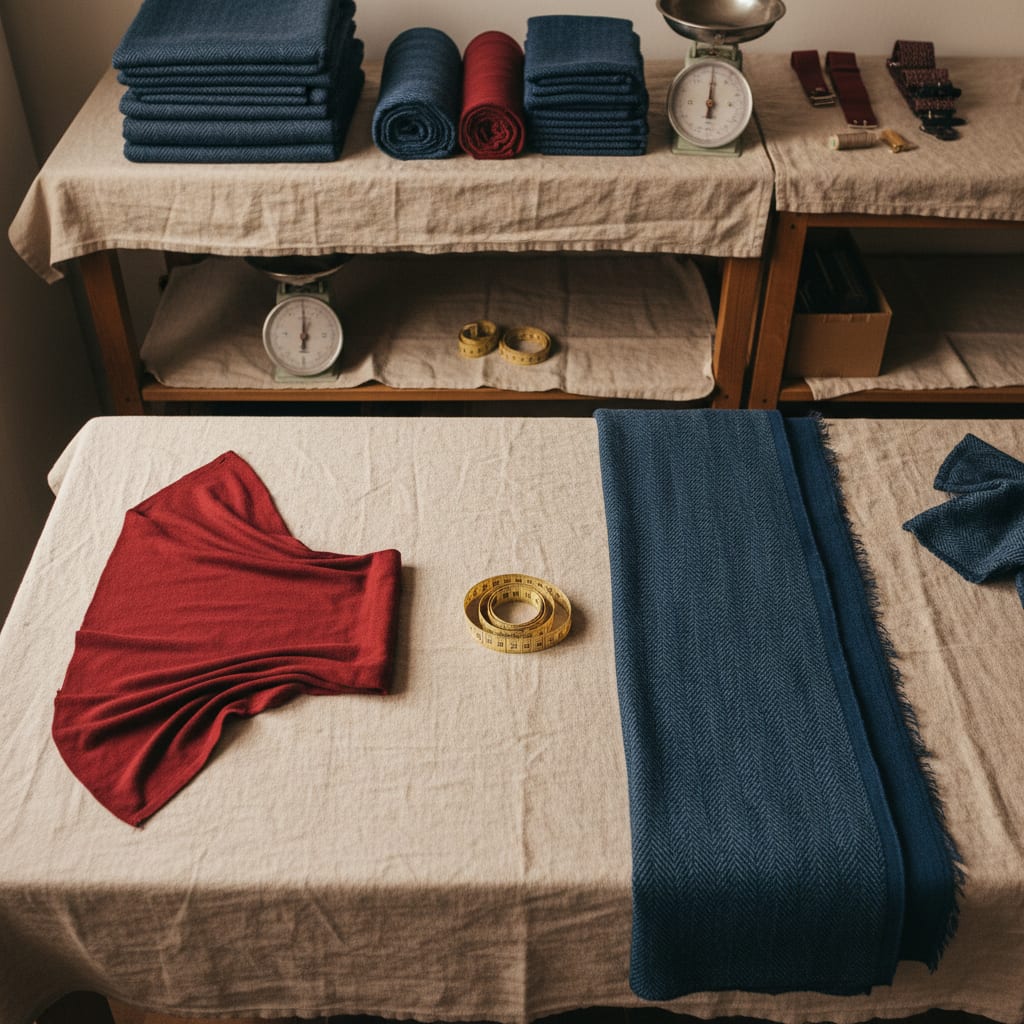
For a first-time wearer with a newborn, a stretchy wrap is usually the better opening move; for a wearer who wants one carrier to cover newborn through preschooler, it’s a woven. The two look similar folded on a shelf and behave nothing alike in use. A stretchy wrap is knit fabric with give in every direction — you pre-tie it, then pop baby in. A woven wrap has no meaningful stretch and is tied around the baby every time, which is harder and buys you back carries, toddler weight, and a decade of use. Here’s how to pick.
The fabric difference is the entire difference
A stretchy wrap is a jersey knit, usually cotton with a small percentage of spandex — the Boba Wrap is 95% cotton with spandex, the Moby Classic is 100% cotton knit. Knit fabric stretches along its length and width. That’s why you can tie it in advance, snug and symmetrical, then slide a baby into the pocket.
A woven wrap comes off a loom, and loom-woven cloth has essentially no stretch along the grain — only a little diagonal give on the bias, which is what makes a good wrap mould around a body without sagging under it. That single mechanical property drives every difference below. No amount of “it’s a wrap either way” reasoning makes them interchangeable.
What the stretch buys you
Pre-tying. You tie once, in front of a mirror, before the baby is involved. For a wearer in the fog of the fourth trimester, this is worth more than any spec sheet: the difficult part happens while your hands are free.
Forgiveness. A slightly-too-loose knit wrap tightens against the baby’s weight and a slightly-too-tight one gives a little. The margin for error is generous, which is precisely what a week-one wearer needs.
Newborn moulding. A soft knit takes the shape of a five-day-old in a way no structured panel manages — at its best in the exact window when a newborn is squishiest and you are most exhausted.
What the stretch costs you
Sag. Give in every direction means the fabric that stretched to admit the baby keeps stretching under the baby. Most wearers find the wrap creeping downward through a wear as their baby gets heavier, and a sagging wrap is not just uncomfortable — it’s the mechanism that drops a chin toward a chest. Manufacturer weight ratings also run well above practical comfort ratings; the Moby Classic is rated to 33 lb, and very few people wear a 33 lb child in one happily.
Layers, therefore heat. The standard stretchy carry puts three layers of fabric across your baby’s back. Cosy in February, brutal in August.
Front carries only. A hard safety rule, not a preference: stretchy wraps are not for back carries. The give that makes them forgiving in front makes them unsafe where you can’t see or reach the baby. Manufacturers say this explicitly, and it’s the most-ignored line in the instruction leaflet.
A short season. Most stretchy wraps get retired somewhere between four and eight months — fine at that price, disappointing if you expected a year.
Where wovens win
Support at weight. Non-stretch cloth transmits load rather than absorbing it, so a woven carries a chunky nine-month-old as comfortably as a newborn — the only wrap type that stays genuinely pleasant into toddlerhood.
Back and hip carries. With no stretch to trap a baby loosely, a woven does secure back carries — the real answer for a toddler who wants to see the world and a wearer who wants their front back. It also does quick hip carries once head control is solid.
One-layer carries. A woven can do a single-layer carry that a stretchy wrap physically cannot, which is why hot-climate wearers who want a wrap end up with wovens.
Longevity and resale. Wovens outlast the child and hold value; a second-hand one from a reputable source is among the better deals in baby gear.
The costs are real too: they are more expensive, slower to learn, and require you to tie correctly with the baby in your arms, which is a different skill from tying an empty pre-tie. Small woven makers like Didymos have been weaving since the 1970s and price accordingly; the collector end of the market is genuinely absurd and entirely optional.
The learning curve, honestly
A stretchy wrap is one carry — a pocket wrap cross carry — repeated forever. Most people are competent in a weekend.
A woven wrap is a technique library: front wrap cross carry, ruck, kangaroo, hip carry, then back carries. Each takes practice, and the wrap’s base size determines which ones you can attempt (a size 6 does most things for most bodies; shorter sizes do fewer, faster carries). Budget a few weeks with a doll or a patient partner before judging it. The full sizing and blend rundown sits in the woven wrap guide; everything type-specific about a stretchy wrap lives in its own decoder rather than here.
Side by side
| Stretchy wrap | Woven wrap | |
|---|---|---|
| Fabric | Knit jersey, stretches all directions | Loom-woven, diagonal give only |
| Pre-tie possible | Yes | No |
| Practical weight ceiling | Low — most retire it by toddlerhood | Full range to preschooler |
| Back carries | No, never | Yes, once trained and baby is ready |
| Layers over baby’s back | Usually three | One to three, your choice |
| Learning curve | A weekend | Weeks, ongoing |
| Typical cost | Low | Mid to very high |
| Best season | Newborn to ~6 months | Newborn to preschool |
Safety applies identically to both
Different fabric, same non-negotiables: tight, in view at all times, close enough to kiss, keep the chin off the chest, supported back. Both types must hold the baby upright and high with the face uncovered — no cradle carries with a newborn, no fabric across the face. Hip-healthy positioning per the International Hip Dysplasia Institute means the wrap supports thigh to thigh with knees above the bottom; a wrap does this well because you set the seat width yourself. Re-check after every settle, since a sleeping baby sags in a knit faster than in a woven, and take anything clinical to your pediatrician. The full check is in the safety guide.
What most families actually do
The common, sensible path: a stretchy wrap for the newborn months because it’s cheap, cosy, and forgiving, then a buckle carrier for the long haul because it’s fast and shareable. Wovens come into the picture for people who discovered they enjoy wrapping, want one carrier to do everything, or need back carries with a toddler who has opinions. If you’re not sure which camp you’re in yet, walk the QB Quiz decision tree first — the type question is the one that prevents regret.
And when you get down to which specific wrap to order, ranked verdicts aren’t this site’s job; our sibling review site handles that, including their rundown of luxury woven wrap alternatives if the collector-tier prices made you flinch.
FAQ: woven vs stretchy wraps
Can I use a stretchy wrap for a back carry?
No. Stretchy wraps are front-carry-only by manufacturer instruction, because the give that makes them forgiving also makes a back carry insecure where you can’t monitor the airway. Back carries belong to wovens, mei tais, and buckle carriers, once your baby is ready for them.
Is a woven wrap too hard for a beginner?
Hard, not too hard. Plenty of people start with a woven and never own anything else. Expect a slower first fortnight, use a mirror, practise a front wrap cross carry with a doll, and find a local babywearing meetup if one exists near you — hands-on help compresses weeks into an afternoon.
Which type lasts longer?
The woven, by years rather than months — it carries a preschooler as happily as a newborn, where the knit one is a single season. The ratings, the sag threshold and the second-hand checks are in the stretchy wrap decoder.
Do I need both?
No. Most families do fine with one wrap plus one buckle carrier, or a woven alone. Buying both wrap types is a preference, not a requirement — and second-hand covers either at a fraction of the price.
Which is better for a summer newborn?
A woven, tied in a single-layer carry, or a lightweight ring sling. Three layers of jersey in July is the most common reason a stretchy wrap ends up in a drawer by August.