Best Baby Carriers for Newborns, Sorted by Carrier Type
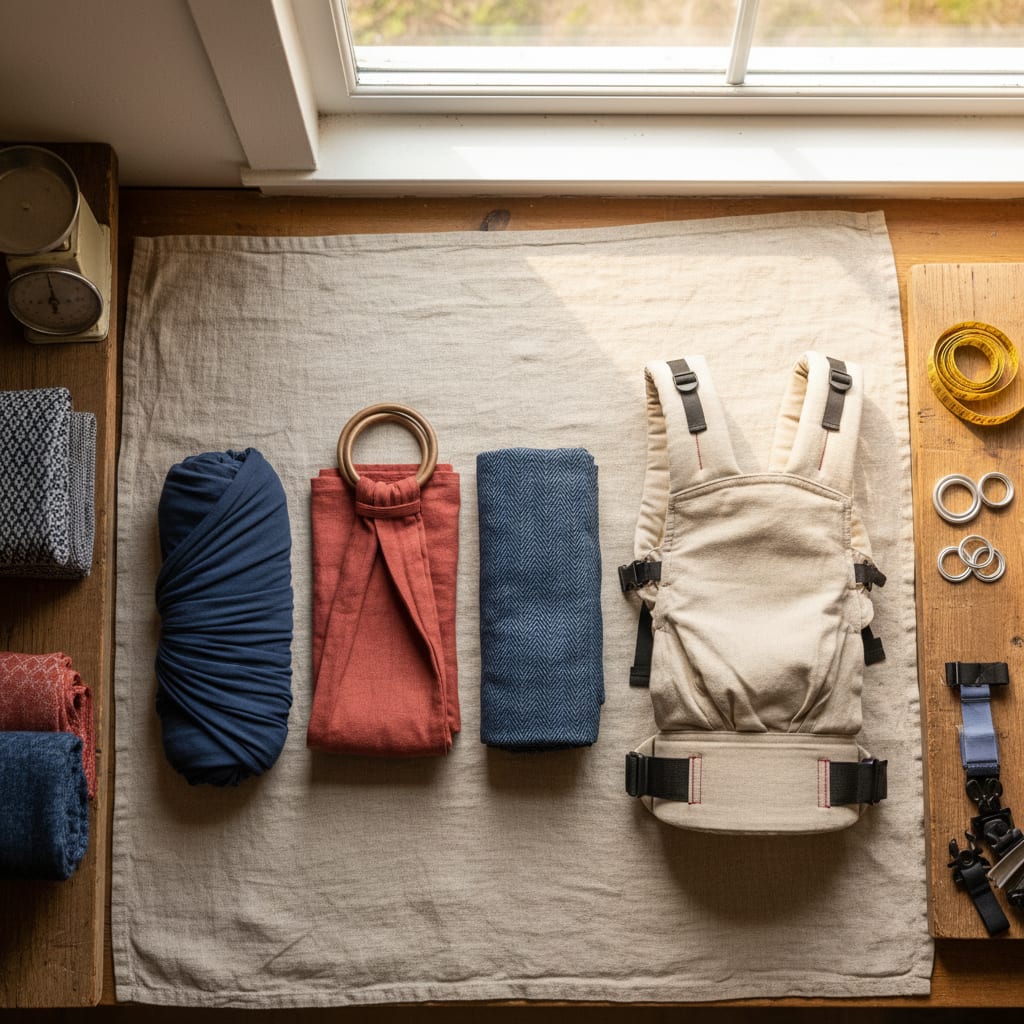
The best baby carrier for a newborn is the one that holds a 7 or 8 lb baby high, snug and upright with no padding added by you. For most families that means one of five types. A knit wrap like the Moby Classic fits the smallest babies most closely. A newborn buckle carrier like the BabyBjörn Mini is the easiest to put on. A pre-wrapped hybrid sits between those two, a ring sling suits quick ups and downs, and a grow-with soft structured carrier is the pick if one carrier has to last into toddlerhood.
Below is one pick per type, with the maker’s own stated range and who should skip it. Every weight range and fabric figure comes from the maker’s product page as loaded on October 27, 2026. Nothing here was weighed, measured or wear-tested by me, and the spec sheets are quoted, not improved on.
How to read a “newborn” label
Three claims show up on every newborn carrier box, and they mean less than they sound like.
- The minimum weight is a manufacturer floor, not a readiness verdict. A 7 lb rating means the maker designed and tested for a 7 lb baby. It does not mean your 7 lb baby fits yet. The fit check further down decides that.
- “Hip healthy” is an acknowledgement, not a certificate. Several makers here say their carriers are “certified Hip Healthy” by the International Hip Dysplasia Institute. The IHDI’s own carriers page says it “is not a certifying body and has never performed safety testing of any products,” and that “no baby carrier can cause or prevent hip dysplasia.” Treat the logo as a statement about the seat shape, not a safety test.
- The safety standard is the real test. In the US the soft carrier standard is ASTM F2236. BabyBjörn states the Mini complies with it and with the European EN 13209-2:2015. When a maker names a standard, that is the line worth reading.
The picks at a glance
| Type | Pick | Stated range | Newborn setup | Learning curve | Skip it if |
|---|---|---|---|---|---|
| Knit wrap | Moby Classic | 8 to 33 lb | Tie it on, no insert | Steepest of the five | You want a back carry or run hot |
| Newborn buckle carrier | BabyBjörn Mini | 7 to 24 lb, 0 to 12 months | Leg straps narrow the openings | Gentlest | You want it past the first year |
| Pre-wrapped hybrid | Boba Bliss | 7 to 35 lb, birth to 18 months | Slip on, then seat baby | Low | You want structure for heavy babies |
| Ring sling | Boba linen ring sling | 8 to 35 lb | Thread, seat, tighten rails | Moderate | You plan long walks on one shoulder |
| Grow-with SSC | Tula Explore | 7 to 45 lb, 0 to 48 months | No insert needed | Moderate | You want something tiny to pack |
Pick 1: the knit wrap (Moby Classic)
A knit wrap is a long piece of stretchy fabric you tie around yourself, then slide the baby into. Nothing else fits a small, curled newborn as closely, because the fabric takes the shape of whatever is inside it.
The Moby Classic is the worked example. Moby’s product page lists it as 100% cotton, “intended for babies from 8 to 33 lbs,” usable “in front or hip carry positions,” and 4.9 meters (16 ft) long. It is machine washable on a cold, gentle cycle.
The same type in a different fabric is the Boba Wrap, 95% cotton French terry with 5% spandex. Boba designs it “from birth up to 35 pounds” and says it “works best up to 20 lbs.” The spandex is the practical difference: it makes the Boba springier, and it is the main thing to weigh between the two.
Good for: the first three or four months, skin-to-skin, a baby who settles only when held close. Skip it if: you want to carry on your back (Moby lists front and hip only), you live somewhere hot (the all-cotton knit is warm; Moby sells a viscose-blend Evolution for that), or 16 feet of fabric in a parking lot sounds like a bad idea. Knit fabric also gives more as babies get heavier, which is why Boba says its own wrap works best up to 20 lb.
Pick 2: the newborn buckle carrier (BabyBjörn Mini)
A newborn buckle carrier is a small, soft panel with shoulder straps and buckles, sized for the first year only. It is the easiest type for a tired parent to get right at 3 a.m., because there is nothing to tie.
The BabyBjörn Mini is the worked example. BabyBjörn’s page gives a period of use of 0 to 12 months, 7 to 24 lbs and 21 to 30 inches, with three positions: newborn, facing in and facing out. For babies between 7 and 10 lbs, the page says “the leg straps should be used to reduce the size of the leg openings.” Facing out needs a baby of at least five months. The Mini has no waist belt in BabyBjörn’s own comparison chart (the Harmony and the Hold have one).
Ergobaby’s Embrace sits in the same class. Ergobaby’s own site would not load when this was written (October 27, 2026), so its specs are not printed here. Check them on the maker’s page before you buy.
Good for: a parent who wants a carrier on in under a minute, partners who share one carrier, and short to medium carries in the first months. Skip it if: you want one carrier to last. With no waist belt, all the weight sits on your shoulders, and BabyBjörn itself says the Mini is suitable “until your child is one year old or until they reach a weight of 24 lbs.”
Pick 3: the pre-wrapped hybrid (Boba Bliss)
A pre-wrapped hybrid looks like a wrap but is sewn into shape, so you put it on like a top and pop the baby in. It keeps most of the snug fit of a knit wrap and removes the tying.
The Boba Bliss is the worked example. Boba lists it for “birth to 18 months (7-35 lbs / 3.2-16 kg),” in 92% cotton and 8% spandex, with a waistband that adjusts from 25 to 58 inches. Boba says it combines “an elastic knit fabric and a woven canvas,” which is what gives it a little more structure than a plain knit wrap.
Good for: a parent who wants wrap-style closeness without learning to tie, and plus-size or petite wearers, given that adjustable waistband. Skip it if: your baby is already heavy for their age, or you want back carries. A sewn hybrid stretches, and a stretchy panel holds a heavy baby less firmly than a structured one.
Pick 4: the ring sling (Boba linen ring sling)
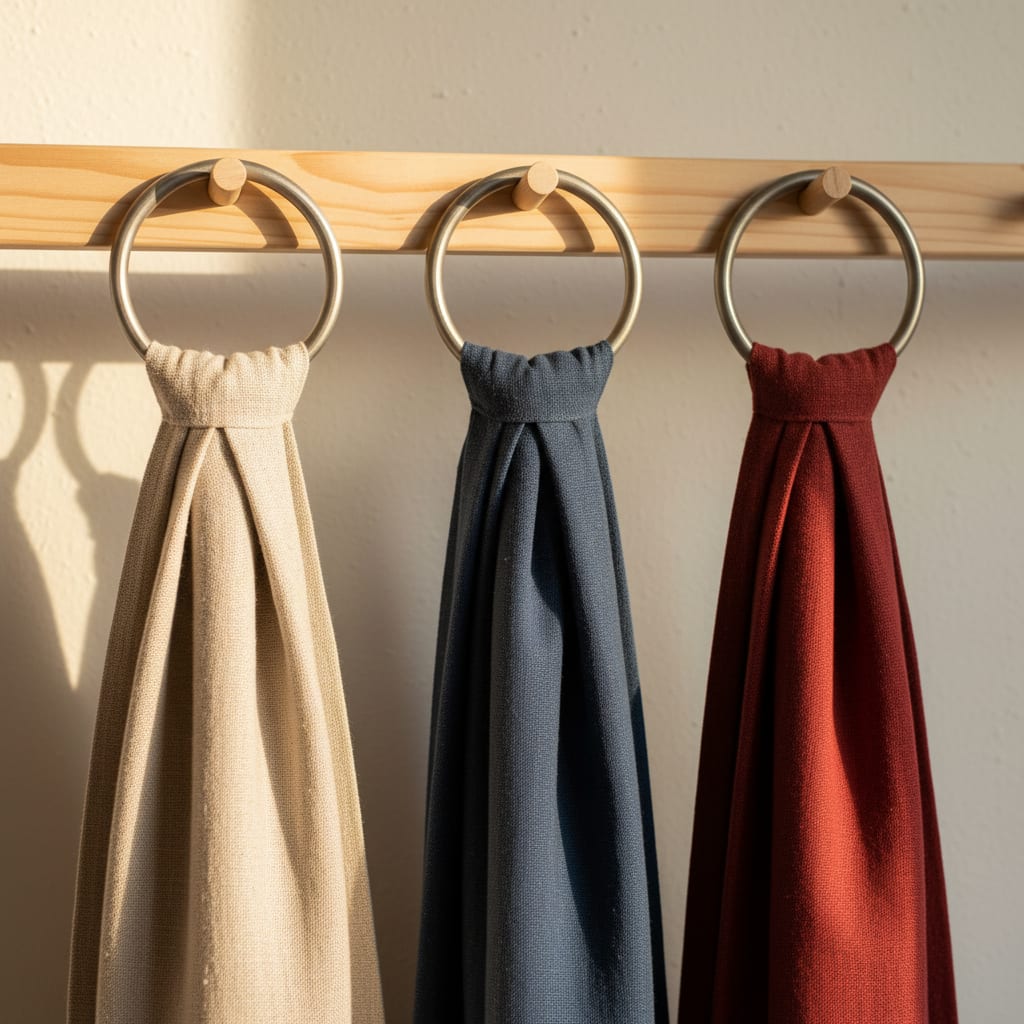
A ring sling is a length of woven fabric threaded through two rings and worn over one shoulder. It is the fastest carrier for short ups and downs: on, baby in, done.
The Boba ring sling is the worked example. Boba’s page lists 52% bamboo viscose and 48% linen, “perfect for babies 8 - 35lbs,” with front, hip and back carry positions. Linen-blend fabric is cooler than knit, which matters for a summer newborn.
There is one newborn caution specific to slings. The AAP’s baby carrier page warns that “some sling carriers may curl your baby’s body into a C-shape, which greatly increases the risk of breathing problems,” and it notes the Consumer Product Safety Commission’s warning about suffocation in infant slings, “particularly those younger than 4 months.” A ring sling worn correctly holds the baby upright against your chest, not cradled low in a pouch. The ring sling tutorial shows how to seat a newborn so the head stays up and the face stays visible.
Good for: second babies, quick errands, a parent who already knows slings. Skip it if: you want long walks in the first months. The load sits on one shoulder, and threading and tightening the rails takes practice.
Pick 5: the grow-with soft structured carrier (Tula Explore)
A soft structured carrier (SSC) has a padded waist belt, padded shoulder straps and buckles. A grow-with SSC adjusts its panel down to fit a newborn, so one carrier can cover the whole carrying stretch.
The Tula Explore is the worked example. Tula’s page lists 7 to 45 lbs and 0 to 48 months, “truly newborn ready from 7 lbs, no infant insert required,” with three positions: inward, outward and back carry.
The Lillebaby Complete All Seasons is the alternative with the most positions. Lillebaby lists it from 7 to 45 lbs, with the waistband extending to 52 inches. Lillebaby’s own newborn advice is worth reading closely. Its “fetal carry” uses an infant pillow “sold separately,” while its narrow-seat inward carry is “appropriate from newborns” and “does not require an infant pillow or insert.”
Good for: buying once, back carries later, a parent who will carry a heavier baby for long walks. Skip it if: you want something soft and small. An SSC is bulkier on a tiny baby, and the panel needs adjusting properly. The SSC anatomy guide covers the newborn adjustments in detail.
The newborn fit check, whichever type you buy
A carrier that fits your newborn passes the same check every time. Ireland’s HSE sums it up as TICKS: tight, in view at all times, close enough to kiss, keep chin off chest, supported back. Run it after every adjustment:
- High and tight. The HSE says to keep the baby “high up and in an upright position with their head supported,” because “loose fabric may cause your baby to slump down.”
- Face visible. You should always see the face by glancing down, with nothing covering the nose or mouth.
- Chin off chest. The HSE asks for “a space of at least a finger width under your baby’s chin.”
- Knees above bottom. Thighs spread around your body in the M-position, with the fabric supporting from knee to knee. The hip-healthy positioning guide shows what that looks like on a small baby.
- Back supported. The baby’s tummy and chest against you, back in its natural curve.
Two more limits come straight from the AAP. Infants “born prematurely or with respiratory problems should not be placed in backpacks or other upright positioning devices,” so ask your pediatrician first if either applies. A carrier is also not a sleep surface. The AAP’s safe sleep guide says a baby who falls asleep in a carrier or sling should be moved “to a firm sleep surface on their back as soon as possible.”
 Carrier sorted? Now the naps.
A newborn who only sleeps on you is normal, and it does not have to stay that way. Betteroo turns a short quiz into a gentle sleep plan for your baby's age.
Take the sleep quiz →
Which type to buy first
If you can only buy one carrier before the birth, pick by how you will use it:
- Mostly at home, lots of contact naps: a knit wrap or the pre-wrapped hybrid.
- Mostly out of the house, with a partner sharing: the newborn buckle carrier.
- One carrier for years, including hikes: the grow-with SSC.
- A second baby and a busy toddler: the ring sling.
The dry aside: the carrier you can put on correctly while someone is crying is the one that gets used, and that is rarely the one with the most features. If you are still torn, the registry picks cover what to put on the list and what to borrow first.
FAQ: newborn baby carriers
What type of baby carrier is best for a newborn? For a typical 7 to 8 lb newborn, a knit wrap or a pre-wrapped hybrid gives the closest fit, and a newborn buckle carrier is the easiest to use. Any type works if it is rated for your baby’s weight and passes the fit check.
Do I need an infant insert for a newborn? Only if the carrier’s maker says so. Some grow-with carriers, such as the Tula Explore, state that no insert is needed. Others need one for certain positions, as Lillebaby does for its fetal carry. Never use a rolled towel in place of a required insert.
When can a newborn go in a carrier? From birth, if the baby meets the carrier’s stated minimum weight and has no health condition your pediatrician has flagged. Premature babies and babies with breathing problems need your pediatrician’s go-ahead first, per the AAP.
Can a newborn face out in a carrier? No. Facing out needs good head control. BabyBjörn says at least five months for the Mini, and most makers give a similar age.
Is it safe for a newborn to sleep in a carrier? Not as a place to sleep. The AAP says to move a baby who falls asleep in a carrier to a firm, flat surface on their back as soon as possible.