Babywearing While Pregnant: Carries That Spare the Bump

Many people keep carrying an older baby or toddler through pregnancy, and the first step is to ask your prenatal care provider whether it is fine for you. If it is, the carry usually changes as the bump grows: front carries early on, then hip carries and back carries, with any waistband sitting above or below the bump rather than across it, or no waistband at all. Load from a raised surface rather than the floor, keep stints short, watch your balance, and stop and call your provider if anything on the warning list below shows up.
This is a babywearing peer educator’s take on carrier technique. Your obstetrician or midwife knows your pregnancy; this page does not.
Why pregnancy changes the maths
Three changes matter for carrying, and the American College of Obstetricians and Gynecologists names all of them on its exercise during pregnancy page:
- Joints. Pregnancy hormones “cause the ligaments that support your joints to become relaxed”, which makes joints “more mobile and at risk of injury.”
- Balance. “The extra weight in the front of your body shifts your center of gravity”, so “you are less stable and more likely to lose your balance.”
- Back. ACOG’s back pain page adds that the growing uterus stretches and weakens the abdominal muscles, changing your posture and straining your back.
A carried child adds weight and moves it around. So the aim is to keep that load close, high and off the bump, and to keep each carry short enough that your back is not doing the work your belly muscles used to.
Carry by stage
Every pregnancy is different, so read this as a rough sequence, not a schedule.
Early on, a front carry may still be comfortable. If it is, keep your child high and snug, and keep the waistband of a buckle carrier from pressing on your lower belly. If a front carry already feels crowded or makes you nauseous, skip ahead.
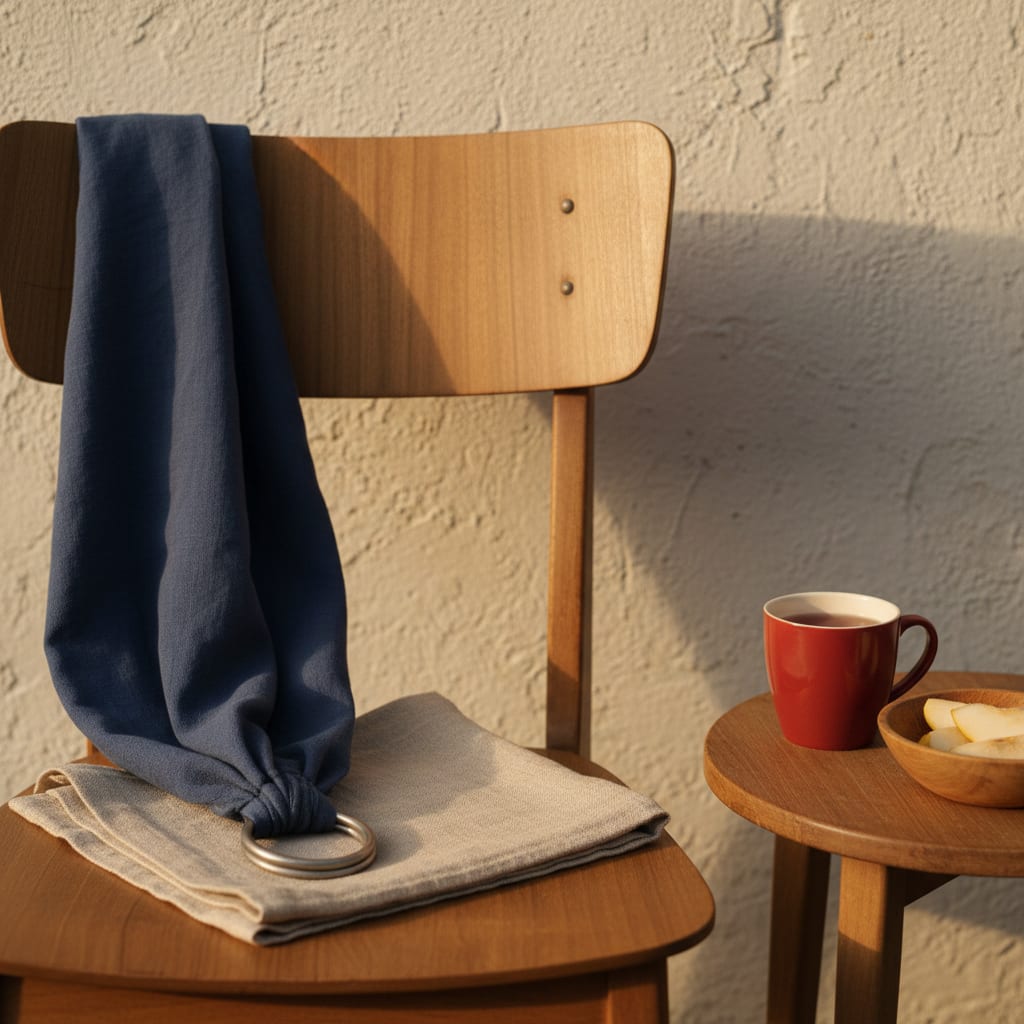
As the bump grows, a hip carry is often the easiest change. Your child sits to the side, so nothing presses on your front. A ring sling, such as the Boba Ring Sling, does a hip carry with no waistband at all. The trade is that one shoulder takes the whole load, so keep these carries brief and swap sides between them.
Later, a back carry moves the weight behind you, which some people find balances the bump. It also brings in a learning curve and readiness rules for your child; the back carry guide covers both. Do not learn the back carry for the first time late in pregnancy, when balance is at its worst. If you want to try it, practise early, over a bed, with another adult helping.
Where the waistband goes
The waistband is the part that fights the bump. Three options:
- High, above the bump, more like an empire line. Some people find a buckle carrier’s waistband comfortable here once the bump is big.
- Low, under the bump on the hip bones, for some front and back carries. Make sure it sits on bone, not on the bump.
- No waistband. An onbuhimo is a back carrier with the waist straps removed, which is why it is popular with pregnant wearers. All the weight hangs from your shoulders instead, and it is designed for children who can sit unassisted. The mei tai and onbuhimo guide explains how it works.
If a waistband presses on your bump in any position, change the position or the carrier.
Loading without lifting from the floor
The heaviest moment of any carry is the lift. ACOG’s advice on lifting during pregnancy is to “squat down, bend your knees, and keep your back straight. Do not bend at the waist to pick up things.” For a carrier, that means:
- Load from a raised surface. Sit your child on a sofa, bed or bench at about hip height, then put them into the carrier from there.
- Let another adult load when one is around, especially for back carries.
- Bend at the knees to pick things up while wearing your child. The AAP’s carrier safety tips say the same for every wearer, because bending at the waist can tip a child out.
Balance, heat and how long
Balance. ACOG notes that you are “at greater risk of falling” in pregnancy. A front carry also hides your feet. Wear flat shoes, use handrails on stairs, and avoid uneven ground while carrying.
Heat. ACOG says to avoid becoming overheated, “especially in the first trimester.” Carrying a child adds the heat of their body to yours, and Ireland’s HSE notes the child can overheat from “the body heat shared between you and your baby” (HSE). Dress you both lightly and drink water.
Length. The NHS says to “listen to your body” in pregnancy and to stop if you feel “uncomfortable, too hot or unwell.” Short carries with breaks are easier to manage than one long one. If your back is already sore, babywearing back pain covers the fit fixes.
Stop and call your provider
ACOG lists warning signs to watch for during physical activity in pregnancy. If you have any of them, it says to “stop and call your ob-gyn”:
- bleeding from the vagina
- feeling dizzy or faint
- shortness of breath before starting
- chest pain
- headache
- muscle weakness
- calf pain or swelling
- regular, painful contractions
- fluid gushing or leaking from the vagina
Take your child out of the carrier in a safe place first, then call.

FAQ: babywearing while pregnant
Is it safe to wear a baby or toddler while pregnant?
Many people do, but it depends on your pregnancy, so ask your obstetrician or midwife first. If they are happy, keep carries short, the load high and close, nothing pressing on the bump, and stop if you notice any warning signs.
What is the best carrier to use while pregnant?
The one that keeps weight off your bump: a ring sling for short hip carries, a back carry for an older child, or an onbuhimo, which has no waistband. A buckle carrier can work if the waistband sits above or below the bump.
When should I stop babywearing during pregnancy?
When your provider advises it, when any warning sign appears, or when carrying becomes uncomfortable or puts your balance at risk. There is no single week that applies to everyone, and stopping early is fine.