Babywearing Twins: Tandem Carries Without the Circus
Yes, you can wear twins — but the useful answer is a sequence, not a yes. For most of the newborn stretch you wear one baby at a time, because two newborn airways cannot be properly watched at once. Tandem carrying becomes reasonable in short stints once both babies have solid, sustained head control. The configuration that works is almost always front plus back, not two on the front. Gear matters far less than the checking routine, and your own back, not the carrier’s label, sets the real ceiling.
Everything below is positioning and technique. Anything medical — prematurity, corrected age, low muscle tone, reflux, feeding plans — belongs to your pediatrician, and the general infant guidance behind the safety rules here comes from AAP-affiliated healthychildren.org and the International Hip Dysplasia Institute.
Why two front carries is the setup to avoid
The airway rule for a worn baby is simple and unforgiving: chin off chest, face turned out and visible, nose and mouth clear of fabric and of you, close enough to kiss. That rule is easy to hold with one baby and hard with two on your front, because each baby’s head occupies the space the other one needs. Panels press inward. A head that slumps sideways lands against a sibling rather than against open air, and you cannot see it happening from above.
Twins also arrive early more often than singletons do, which means smaller babies with less head control for longer. That is the population least able to reposition itself out of a chin-to-chest tuck, so the standard newborn caution applies twice over.
Newborn stage · one at a timeSolid head control · front + backSitting steadily · hip + hip
Stage one: one baby at a time, and it counts
Wearing one twin is not a lesser version of babywearing twins. It is the version that works for the first several weeks, and it buys the thing you are short of: two hands, plus a settled baby who is not being put down and picked up on a loop.
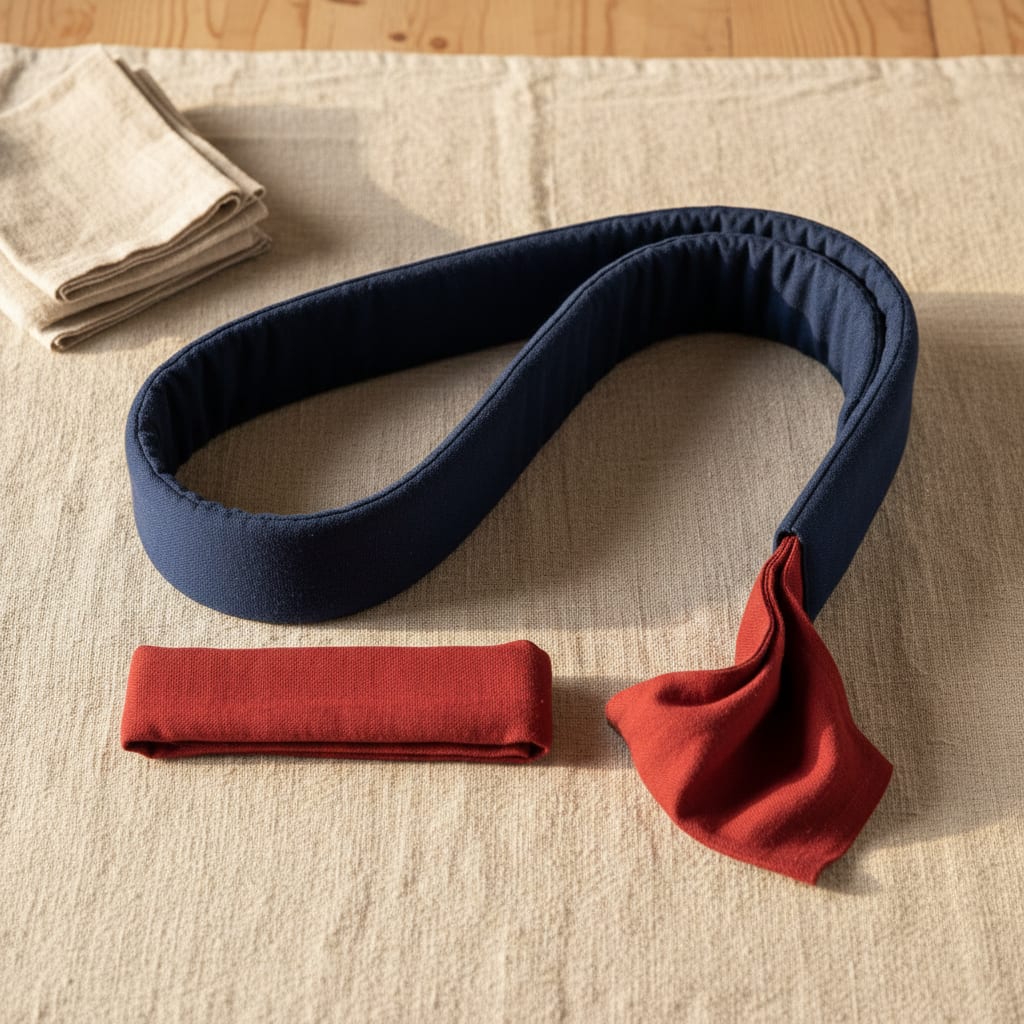
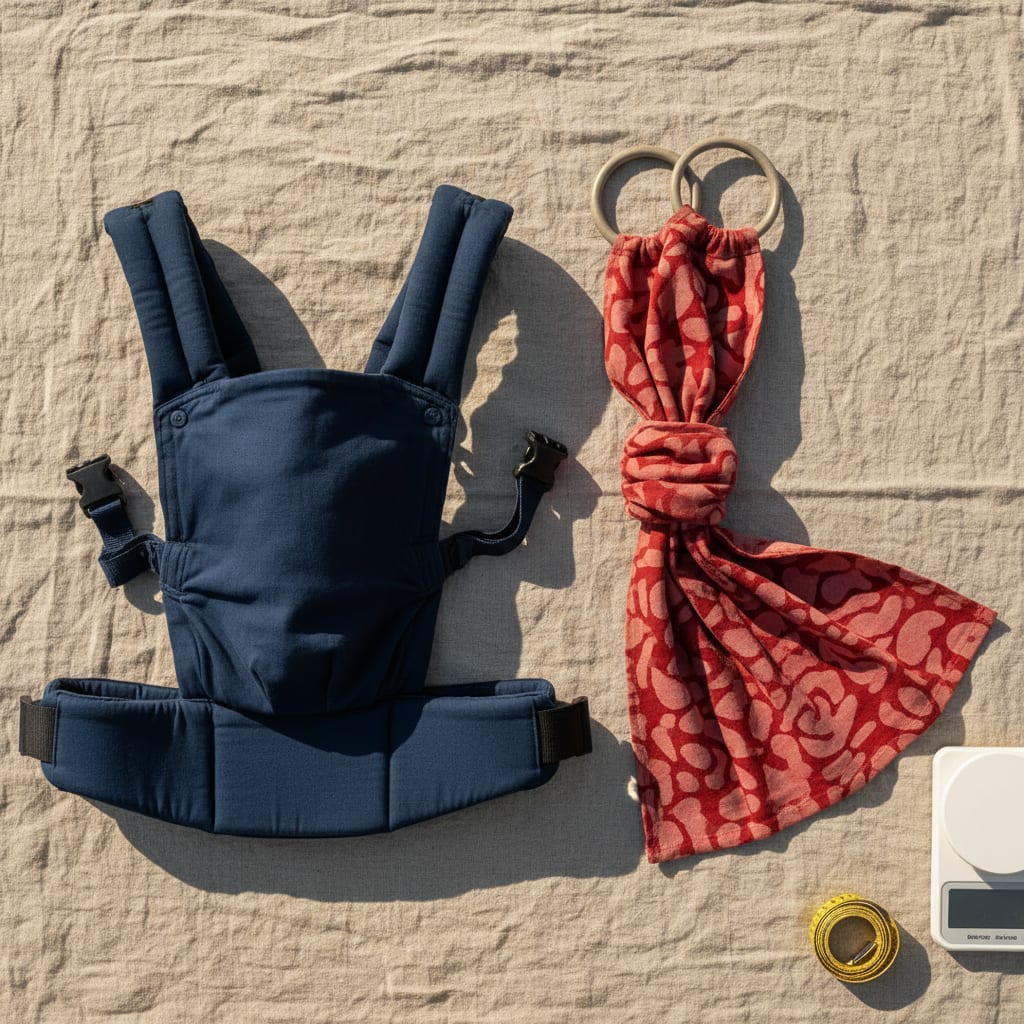
In practice most families rotate — the baby who is unsettled goes in, the other gets the bassinet or a second adult. A stretchy wrap such as the Boba Wrap suits this stage because it can be pre-tied once in the morning and re-used all day, so swapping babies takes seconds instead of a full re-wrap. A ring sling does the same job faster still for short stints; the threading and tightening details are in the ring sling guide.
The tandem configurations that work
Front and back. The standard tandem answer, and the only one that keeps both airways genuinely visible — the front baby to your eye, the back baby to a mirror and your hand. It is gated behind the back-carry criteria: strong sustained head and neck control, and a carrier rated for back carrying. Do not start learning back carries with twins as your first attempt; get the technique clean with one baby first, low over a bed, with a spotter. The full readiness checklist is in the back carry guide.
Hip and hip. Two ring slings, one on each shoulder, tails falling to opposite sides. This suits babies who sit steadily and want to see out, and it is genuinely quick — but both your shoulders are loaded independently and neither has a waistband taking weight, so it is a twenty-minute carry, not a morning.
A purpose-built tandem carrier. These exist and are a real category: one waistband, two panels, both babies on you at once. The TwinGo Carrier Original is the canonical worked example — rated roughly 10 to 45 lb per child, and it separates into two independent single carriers, which matters because you will use it that way most days.
What does not work: two stretchy wraps at once. Knit fabric relies on your body to hold its shape, and two of them layered fight each other for tension. You get sag exactly where you cannot afford it.
Weight is the part nobody plans for
Do the arithmetic before you buy anything. Two babies at 12 lb each is 24 lb of live, shifting load, plus a pound or two of carrier — and unlike a backpack, it moves. That is why tandem stints are measured in minutes and why the waistband, not the shoulder straps, is the part that has to be right. The mechanics of where that load should sit are in babywearing without back pain, and they apply with more force here than anywhere else on this site.
The honest planning rule: a tandem carry is for the school run, the supermarket aisle, the twenty minutes when both babies need to be off the floor at once. It is not the default way to spend a Tuesday.
The check routine, doubled
Run it out loud, once per baby, every time you adjust anything and roughly every fifteen minutes otherwise:
- Chin off chest — two fingers’ clearance under the jaw.
- Face visible — nose and mouth clear of fabric, of your body, and of the other baby.
- Knees above bottom, thighs supported knee to knee.
- Back supported in a gentle curve, not pulled straight or curled tight.
- Fabric tight enough that the baby cannot slump when you lean forward.
Saying the checks aloud sounds ridiculous for about two days and then stops feeling optional. With two babies the failure mode is not forgetting the checks; it is running them once and assuming you did both. The complete version, including what each rule is protecting against, is in babywearing safety.
Where wearing fits in a twin day
Wearing is a load-bearing tool while the rest of the day gets organised — and with twins, the thing most in need of organising is sleep timing, because two babies on two different rhythms means someone is always awake. Aligning them is its own project; there is a practical twin sleep schedule walkthrough over at Big Family Playbook that covers the scheduling side properly.

The dry aside: nobody has ever described tandem wearing as elegant. It is a logistics solution with a baby attached to each end.
FAQ: babywearing twins
Can you wear both twins at the same time?
Yes, once both have strong, sustained head control and you can keep both airways visible. Before that, wear one at a time. Two newborns on the front is the one configuration to avoid, because each baby’s head crowds the other’s breathing space and you cannot see it from above.
What age can you start tandem babywearing?
There is no fixed age, because it depends on head control rather than the calendar — and with twins, corrected age matters more than birth date. Front-and-back tandem is additionally gated behind your carrier’s back-carry rating and your own confidence with the technique. Ask your pediatrician if either baby was premature or has low muscle tone.
Do you need a special twin carrier?
No. Most twin families use two ordinary carriers, worn one at a time or in a front-and-back pair, and many never buy a dedicated tandem carrier at all. A purpose-built twin carrier is convenient rather than necessary, and the ones worth having separate into two single carriers so the money is not stranded.
Can I use a stretchy wrap for both twins?
One at a time, yes — a pre-tied stretchy wrap is excellent for swapping babies quickly through the newborn weeks. Both at once, no. Knit fabric holds its shape by tension against your body, and two babies in one stretchy wrap, or two wraps layered, sag in exactly the way that puts a chin on a chest.
How long can twins stay in carriers?
Shorter than a single baby, and your back is usually the first limit to speak up. Newborns in any carrier need frequent position and airway checks, and a tandem carry adds a load that most adults feel within twenty to thirty minutes. Take them out for feeds, for diaper changes, if anyone is overheating, and any time an airway check is anything other than clean.